
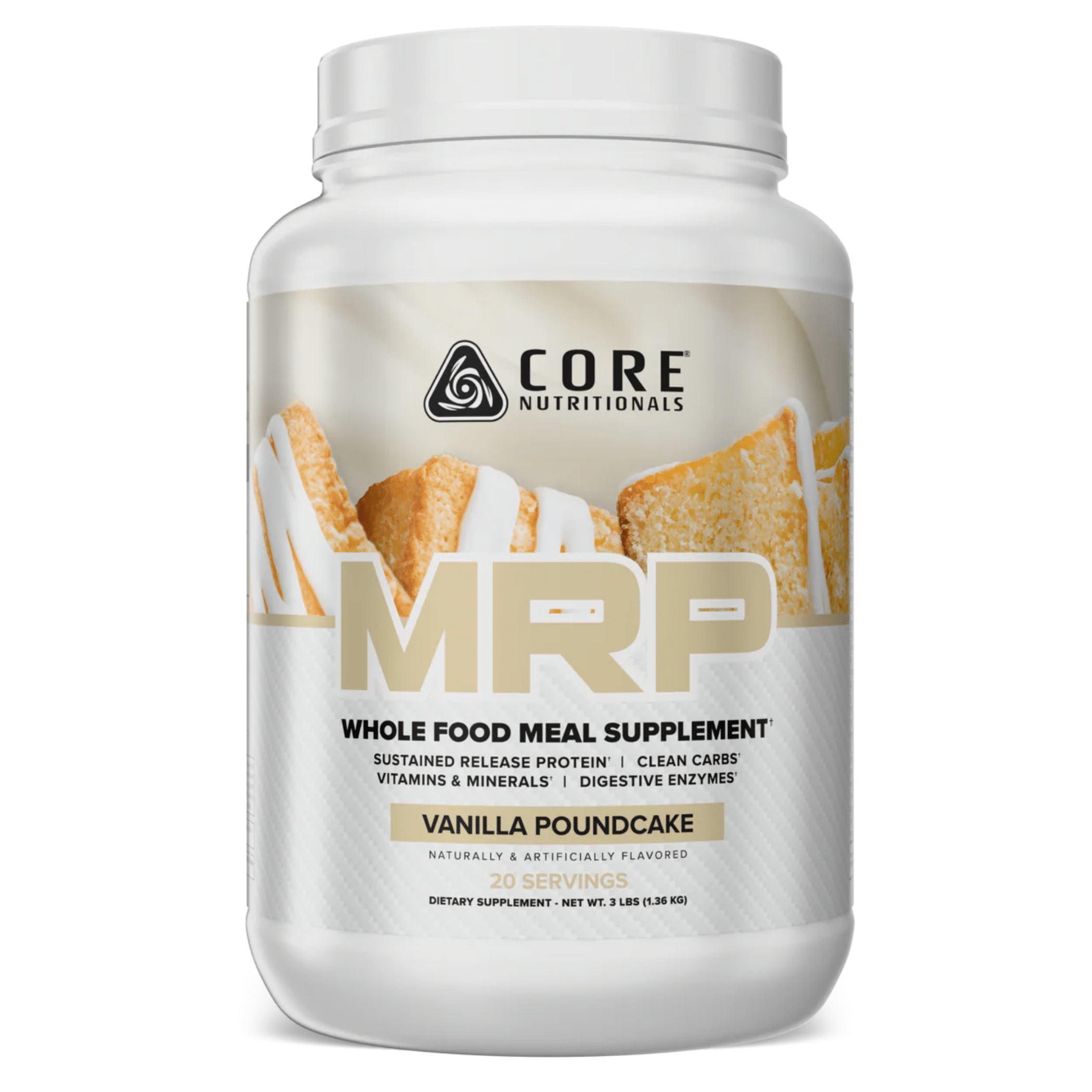
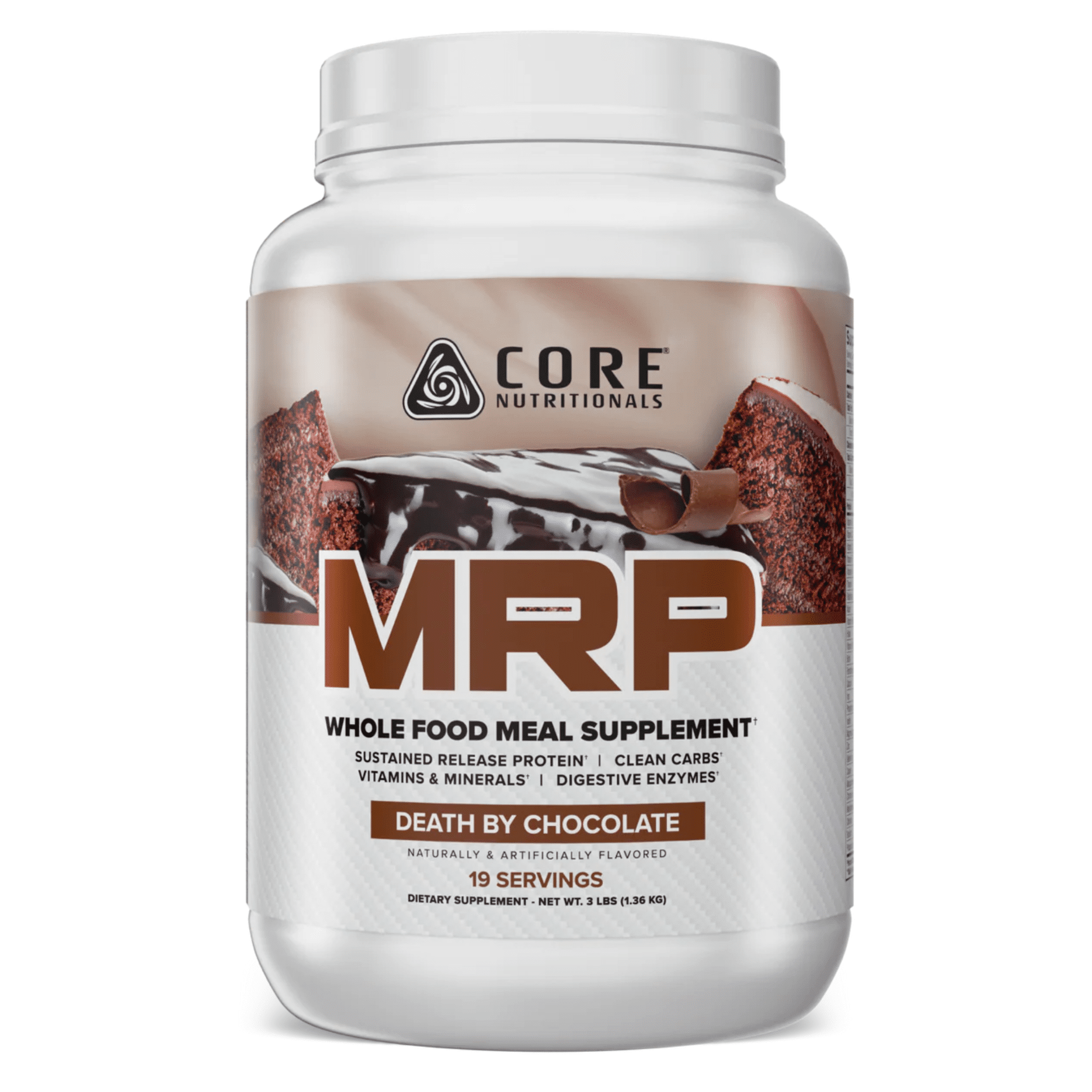
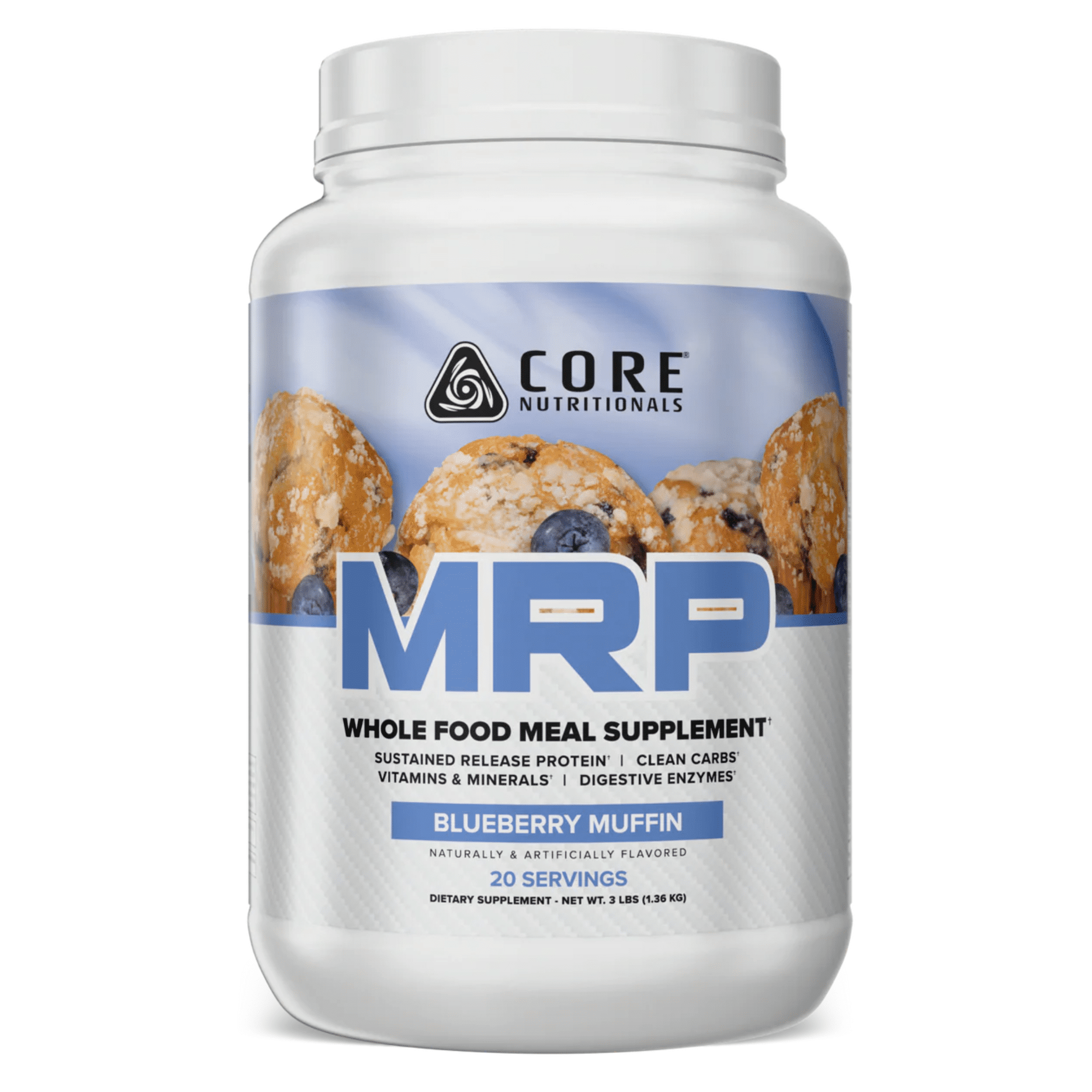
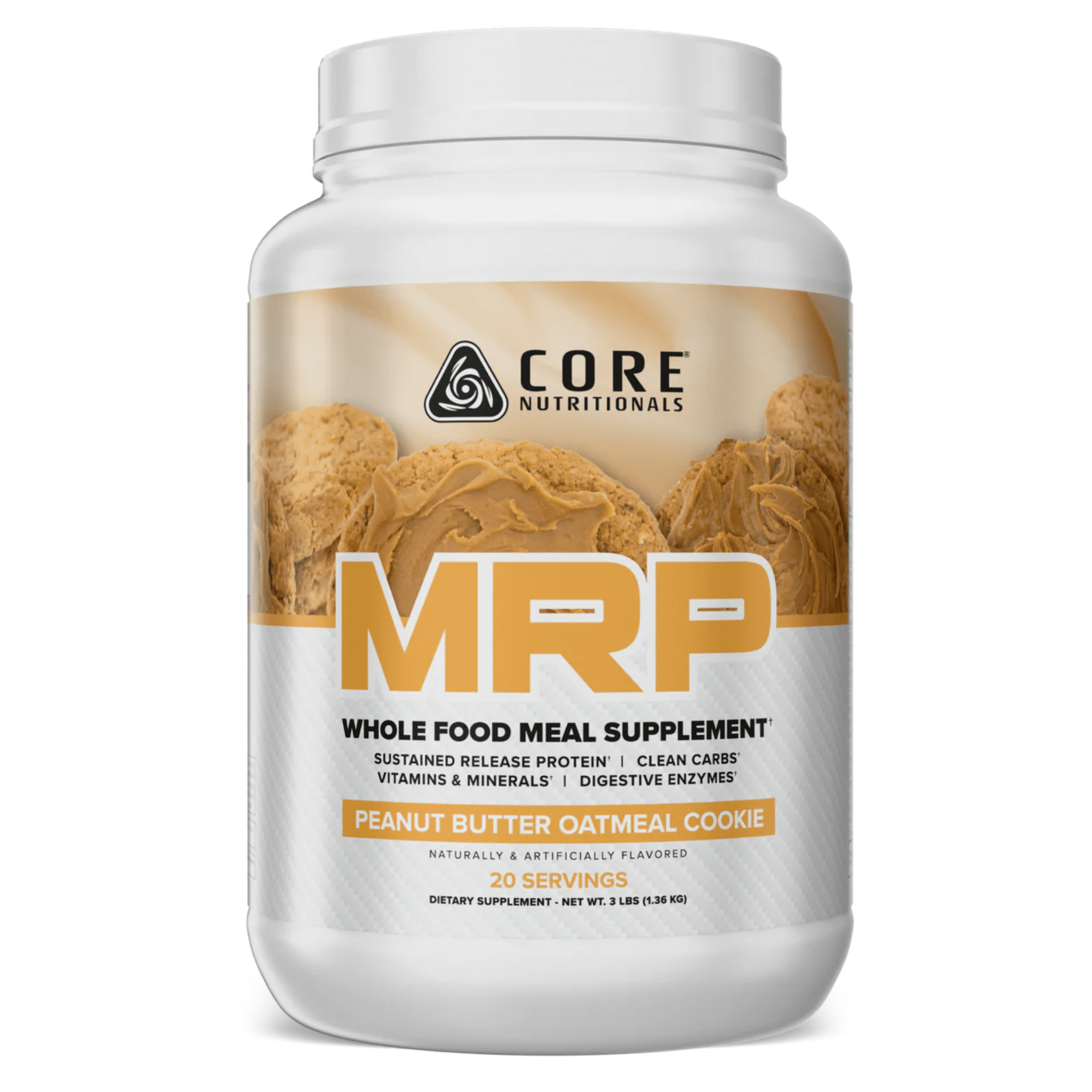


Description
Core Nutritionals MRP
A meal replacement powder supplying protein, carbohydrate and fat together — a complete meal in a shaker rather than a protein shake.
An MRP is not a protein shake
Worth being clear, because people buy the wrong one.
| Protein powder | Protein only, ~120 cal | Tops up daily protein |
| Meal replacement | All three macros, plus micronutrients | Replaces an actual meal |
| Mass gainer | Very high calorie, carb-dominant | Adds calories on top of meals |
A protein shake is not a meal. Drinking 25g of protein instead of eating lunch leaves you short on energy, fat and micronutrients — and hungry within the hour. An MRP is built to actually stand in for a meal.
The honest position: food first
We would rather say this plainly.
Real food is better than a meal replacement. It brings fibre, phytonutrients, a broader amino acid and fatty acid profile, and the satiety that comes from chewing. If you can eat a proper meal, eat one.
The case for an MRP is entirely about the alternative. It is not competing with a good meal — it is competing with:
- Skipping the meal entirely, which is the most common outcome for busy people
- Whatever is available at a petrol station or vending machine
- Eating nothing until you get home and then eating far too much
Against those, an MRP wins comfortably. A structured shake with balanced macronutrients beats a missed meal every time — and consistency across the week matters more than any individual meal being perfect.
Where it genuinely fits
- Long working days where a proper meal is not realistic
- Travel, where the food options are poor
- Between-meal gaps that would otherwise become five or six hours
- Anyone with a poor appetite who finds drinking calories easier than eating them
- Hitting daily targets when a whole meal is one too many to prepare
What to look for in a meal replacement
These checks work on any MRP:
- Protein per serving. 25 to 40g is a genuine meal's worth. Below 20g it is closer to a snack
- Carbohydrate source. Complex carbohydrates and fibre digest more slowly and keep you fuller than maltodextrin alone
- Fat source. Fat slows gastric emptying, which is a large part of why an MRP is more satiating than a protein shake
- Fibre. Frequently omitted, and it is one of the main things separating an MRP from a whole-food meal
- Micronutrients. A meal you are replacing contained vitamins and minerals
- Full label disclosure, which is what makes any of these checks possible
Why Core Nutritionals
Core built their reputation on fully disclosed labels with no proprietary blends and doses matching the research rather than the marketing.
On a meal replacement that transparency lets you do the arithmetic that matters — protein per calorie, and whether the carbohydrate and fat sources are ones that will actually keep you full.
Specs
| Type | Complete meal replacement |
| Macros | Protein, carbohydrate and fat |
| Label | Fully disclosed, no proprietary blends |
| ⚠ Allergen | Check the panel — most contain milk |
How to take it
- In place of a meal, not in addition to one — unless you are deliberately gaining.
- Mix with water to keep the macros as labelled, or milk if you want more calories.
- Add fruit or nut butter if you want it closer to a full meal.
- No more than one or two a day. Whole food should still be the majority of your intake.
- Count it toward your daily totals as a meal rather than a supplement.
Who this is for
- Anyone whose schedule regularly means skipping meals
- People who travel for work
- Anyone with a poor appetite who finds drinking calories easier
- People trying to hit daily protein and calorie targets consistently
- Shift workers with irregular eating patterns
Who this is not for
Anyone who can eat real food instead. Whole food is better, and we will say so.
Anyone replacing most of their meals with it. One or two a day at most — fibre, phytonutrients and satiety all come from food.
Anyone wanting a protein top-up rather than a meal. Whey isolate is cheaper and leaner for that.
Anyone wanting to gain weight quickly. A mass gainer is designed to sit on top of meals rather than replace them.
Anyone with a milk allergy, depending on the sources.
Not for anyone under 18 without medical advice.
Stack it with: creatine, which mixes in without affecting anything.
Frequently asked questions
How is an MRP different from a protein shake?
A protein shake supplies protein only. A meal replacement supplies protein, carbohydrate, fat and micronutrients — enough to actually stand in for a meal.
Is it better than real food?
No. Real food brings fibre, phytonutrients and the satiety of chewing. An MRP competes with skipping the meal, not with eating a good one.
How many can I have a day?
One or two at most. Whole food should still be the majority of your intake.
What should I look for in an MRP?
25 to 40g protein, complex carbohydrates rather than maltodextrin alone, a genuine fat source, fibre, micronutrients, and a fully disclosed label.
Why does the fat matter?
Fat slows gastric emptying, which is a large part of why a meal replacement keeps you fuller than a protein shake.
Can I use it to gain weight?
It is designed to replace a meal rather than add to one. A mass gainer is the product for adding calories on top.
Water or milk?
Water keeps the macros as labelled. Milk adds roughly 100 to 150 calories and makes it creamier.
Should I count it as a meal or a supplement?
As a meal — that is what it is replacing.
Helpful workers
Excellent product
I eat mostly whole foods and low carb. This mrp is delicious & oaty and quick after long runs, bikes or swims to get something in the tank until I can eat a meal. I got the blueberry crumb muffin or some such thing as recommended by the coalition rep.
You may also like
Recently viewed
- Opens in a new window.