

Description
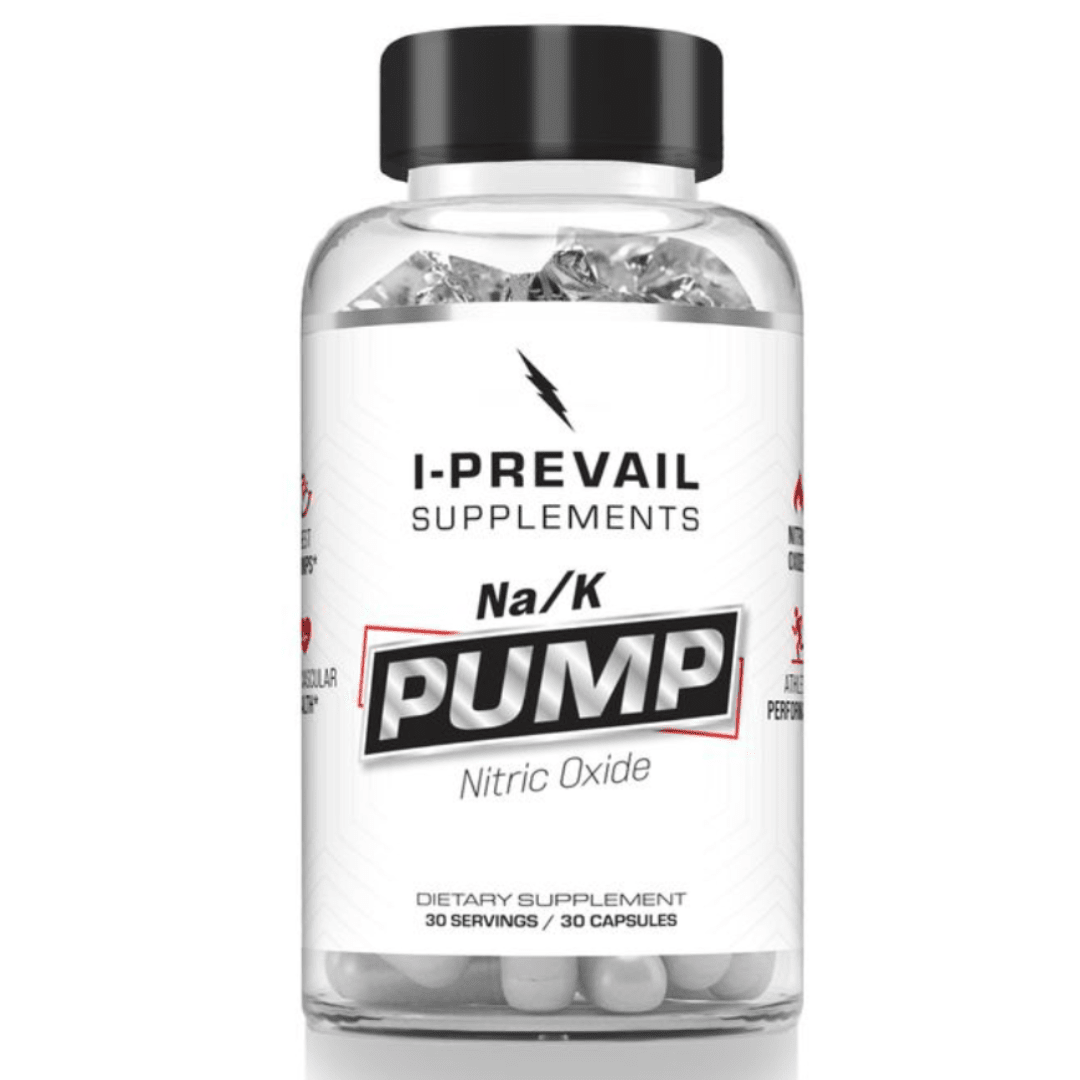
I Prevail NA/K Pump Pills
Pump capsules built on sodium and potassium rather than the usual citrulline and glycerol — a different mechanism, and a genuinely underrated one.
Why electrolytes produce a pump
This is the interesting part, and it is not obvious.
"Pump" is really two separate things: blood flow into the muscle, and water volume inside the muscle cells. Most pump products work on the first. This one works on the second.
Sodium and potassium are the two electrolytes that govern where water sits in your body. Potassium is the primary intracellular ion — the one inside your cells. Sodium is the primary extracellular one. The gradient between them is maintained by the sodium-potassium pump, and it determines cell volume directly.
Get that balance right and muscle cells hold more water. That is a pump.
And there is a performance angle beyond appearance: the sodium-potassium gradient is what makes muscle cells electrically excitable. Every contraction depends on it — which is why electrolyte depletion causes cramping and weakness rather than merely flatness.
⚠ Sodium has been unfairly demonised for lifters
Worth addressing, because a lot of people restrict sodium and then wonder why they look and feel flat.
Sodium restriction is sensible advice for a sedentary population with high blood pressure. It is frequently poor advice for someone training hard in a hot gym.
- You lose substantial sodium in sweat — considerably more than most people replace
- Low sodium means lower blood volume, which means worse pumps, worse performance and more lightheadedness on standing
- Carbohydrate storage requires water, and water balance requires sodium
- Cramping is frequently a sodium problem rather than a magnesium or potassium one
The old bodybuilding practice of cutting sodium before a show is about acute water manipulation, not about health or performance — and copying it during normal training is counterproductive.
⚠ That said: if you have high blood pressure or a cardiovascular condition, none of this applies to you. Speak to your doctor before adding sodium deliberately.
Potassium — and the honest limitation
We would rather tell you this than let you assume.
Over-the-counter potassium supplements in America are capped at 99mg per serving. That is a regulatory ceiling, because high-dose solid potassium has been linked to gastrointestinal lesions — not a nutritional recommendation.
Your daily requirement is roughly 3,400 to 4,700mg. So any capsule is supplying a very small fraction of what you need.
Which means potassium has to come from food. Potatoes, bananas, beans, leafy greens, yoghurt and fish are all far larger sources than any supplement. A capsule is a top-up around heavy sweating, not a correction.
The sodium side is different — sodium is not capped, and supplementing it meaningfully is straightforward.
How it fits with other pump products
Genuinely additive, because the mechanisms do not overlap:
| Citrulline | Raises arginine, feeding nitric oxide production | Blood flow |
| Nitrates | Reduced to nitric oxide, bypassing that enzyme | Blood flow |
| Glycerol | Osmolyte drawing water into cells | Cell volume |
| Sodium and potassium | Govern where water sits | Cell volume |
Electrolytes also make glycerol work better. Glycerol pulls water into cells, but it needs water available and the electrolyte balance to hold it there. Pairing the two is more sensible than either alone.
Specs
| Key ingredients | Sodium and potassium |
| Format | Capsules — no mixing |
| Stimulants | None |
Capsules are a genuine advantage here — electrolytes taste unpleasant in powder form, and this avoids that entirely.
How to take it
- Before training, following the label.
- ⚠ Drink plenty of water. Electrolytes govern where water sits — without adequate fluid there is nothing to position.
- Particularly useful in hot conditions or during long sessions, where sweat losses are highest.
- Stacks with any pre-workout — stimulant-free and a different mechanism.
- Pairs well with a glycerol product, which needs the electrolyte balance to work properly.
Who this is for
- Anyone who sweats heavily or trains in heat
- People who cramp during training — frequently a sodium issue
- Anyone whose pumps have gone flat on a low-sodium diet
- People on low-carbohydrate diets, where sodium losses are higher
- Anyone wanting a pump mechanism their pre-workout does not cover
- People who dislike mixing powders
Who this is not for
⚠ Anyone with high blood pressure or a cardiovascular condition, without speaking to a doctor. Deliberately adding sodium is a genuine consideration there.
⚠ Anyone with kidney disease, or taking ACE inhibitors, ARBs or potassium-sparing diuretics. Those medications raise potassium retention, and adding more is a real interaction.
Anyone who will not drink extra water alongside it.
Anyone expecting it to replace dietary potassium — a capsule is a small fraction of your daily requirement.
Anyone wanting energy. There are no stimulants here.
Not for anyone under 18, pregnant or nursing.
Stack it with: citrulline for the blood flow side, and a glycerol product — electrolytes help glycerol work.
Frequently asked questions
How do electrolytes produce a pump?
Sodium and potassium govern where water sits in the body. Potassium is the main intracellular ion and sodium the main extracellular one — the gradient between them determines cell volume directly.
Isn't sodium bad for you?
Restriction is sensible for a sedentary population with high blood pressure. For someone training hard and sweating heavily, low sodium means lower blood volume, worse pumps and more cramping.
Why is potassium capped at 99mg?
A regulatory ceiling on over-the-counter potassium, because high-dose solid potassium has been linked to gastrointestinal lesions. Your daily need is around 3,400 to 4,700mg, so food is the only practical source.
Does it work with citrulline?
Yes, and they are additive — citrulline works on blood flow, electrolytes on cell volume.
Will it help with cramping?
Possibly. Cramping during training is frequently a sodium problem rather than a magnesium or potassium one.
Do I need extra water?
Yes. Electrolytes govern where water sits — without adequate fluid there is nothing to position.
Can I take it with blood pressure medication?
Speak to your doctor first, particularly with ACE inhibitors, ARBs or potassium-sparing diuretics.
Why capsules rather than powder?
Electrolytes taste unpleasant in powder form. Capsules avoid that entirely.
You may also like
Recently viewed
- Opens in a new window.