

Description
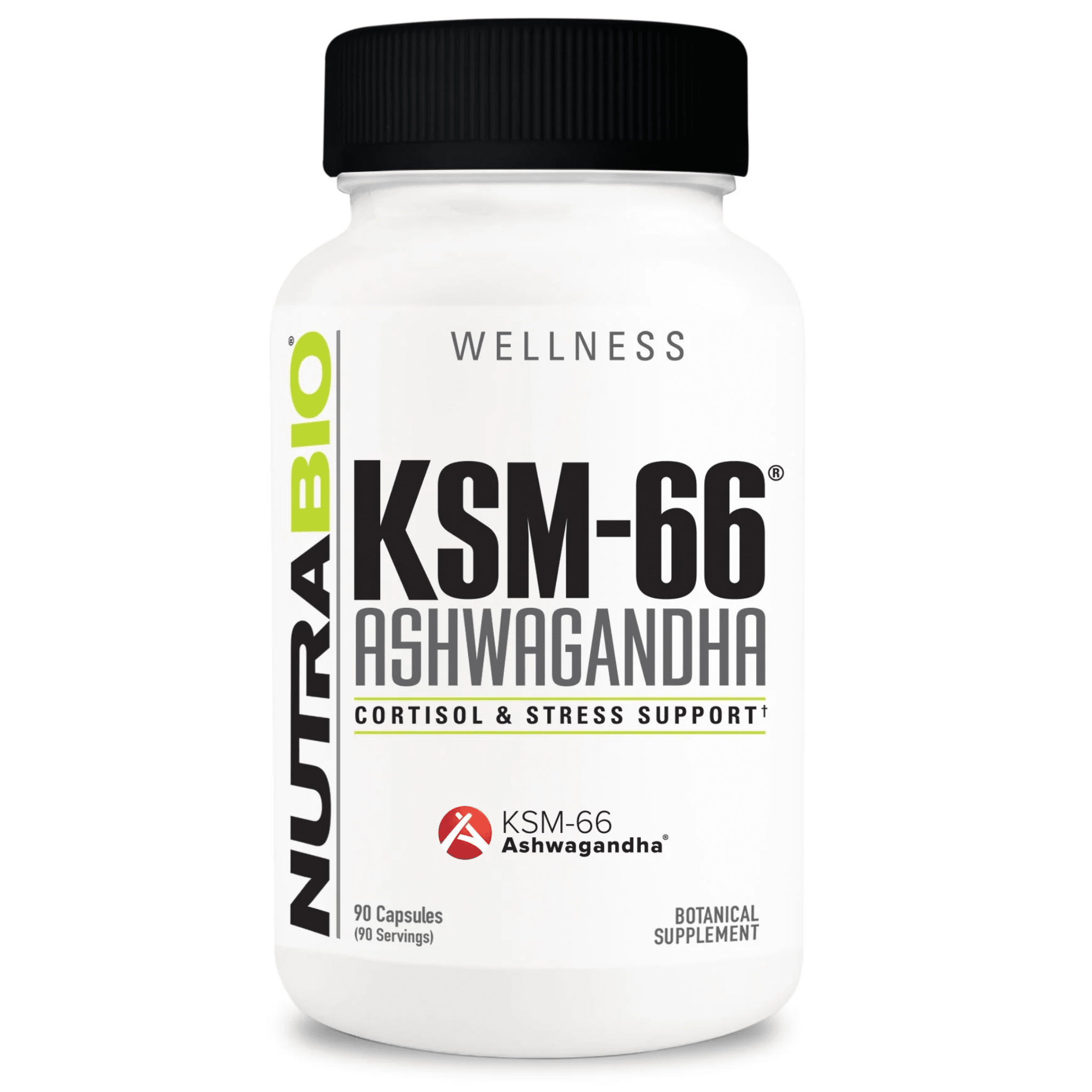
NutraBio Ashwagandha KSM-66
600mg of KSM-66 ashwagandha in a single capsule, standardised to a minimum 5% withanolides by HPLC. One ingredient, no fillers or binders.
Root or leaf? This is the quality question nobody asks
Ashwagandha extracts are not interchangeable, and the difference is not obvious from the front of a bottle.
KSM-66 is extracted from 100% root — no leaves. That matters for a specific reason:
- The overwhelming majority of clinical trials on ashwagandha used root extract. That is where the evidence base sits
- Leaf material is cheaper and can test higher for withanolides, which makes a label look impressive — but it was not what was studied, and leaf extract has traditionally been used topically rather than taken internally
- Some countries permit only root in supplements and medicines
So a product advertising a high withanolide percentage is not automatically better. If it achieved that with leaf material, the number has moved further from the research rather than closer to it.
What to look for: the words "root extract", and a named standardised material like KSM-66 or Sensoril. A bottle listing only "ashwagandha powder" tells you very little.
600mg in one capsule is genuinely unusual
Most brands need two capsules to deliver 600mg, because fillers and flow agents take up space.
NutraBio fit the full 600mg into a single capsule — which is a direct consequence of using no excipients. It also means a 90-capsule bottle is a three-month supply at one per day, which changes the cost calculation considerably.
And 600mg is the researched dose. Most trials on KSM-66 use 300 to 600mg daily, so one capsule sits at the top of that range rather than needing two.
How it actually works — and the honest bit about testosterone
The active compounds are withanolides, and they appear to act on the hypothalamic-pituitary-adrenal axis — the system governing your stress response — as well as GABAergic signalling.
The best-supported effect is cortisol reduction. Multiple controlled trials report meaningful decreases in cortisol alongside improvements in perceived stress and sleep quality.
Now the part usually oversold: ashwagandha appears in a great many testosterone products, and it is worth being precise about why.
It does not directly raise testosterone. What it does is lower cortisol — and chronically elevated cortisol suppresses testosterone. So the effect is indirect, and it depends entirely on stress being your limiting factor.
If you are chronically stressed, sleeping badly and training hard, this may help. If your stress is already well managed, do not expect it to move your hormones. That is the honest version, and it is a more useful thing to know than a percentage figure.
The strength and endurance research
Worth mentioning because it is unusual for an adaptogen to have it.
Controlled trials in resistance-trained men have reported greater strength gains on 600mg of KSM-66 daily than placebo over eight-week protocols, alongside improvements in recovery markers.
The plausible mechanism is the same one: lower cortisol means a better recovery environment, and better recovery means more of your training turns into adaptation.
Specs
| KSM-66 Ashwagandha | 600mg per capsule, root extract |
| Standardisation | Minimum 5% withanolides, by HPLC |
| Extraction | Green chemistry — no alcohol or chemical solvents |
| Other ingredients | Vegetable capsule only. No fillers or binders |
| Certification | Kosher, halal, vegetarian, GRAS |
| ⚠ Allergens | Processed in a facility that also handles milk, eggs and fish |
| Testing | Third-party tested, published at checkmysupps.com |
⚠ Three cautions worth reading properly
Thyroid. Ashwagandha can increase thyroid hormone levels. If you have hyperthyroidism, or take thyroid medication, speak to your doctor before use — this is a genuine interaction, not a boilerplate warning.
Autoimmune conditions. Ashwagandha appears to stimulate immune activity, which is not desirable in conditions where the immune system is already overactive — lupus, rheumatoid arthritis, MS, Hashimoto's. Check with your doctor first.
It is a nightshade. Withania somnifera belongs to the Solanaceae family, alongside tomatoes, peppers and aubergine. Worth knowing if you react to nightshades.
Drowsiness is the most commonly reported side effect, and digestive upset the second. Both are usually mild.
How to take it
- One capsule daily between meals. That is already the researched dose.
- For sleep: take it 30 to 60 minutes before bed.
- For stress through the day: split two capsules morning and evening, which covers both the morning cortisol peak and the evening rise that disrupts sleep.
- Take it with a small snack if it upsets your stomach on an empty one.
- Give it four to eight weeks. Most trials run that long — this is not an acute effect.
- Cycling is optional, though many people prefer periodic breaks with adaptogens.
Who this is for
- Anyone under sustained stress — work, training load, poor sleep, or all three
- People whose sleep quality has slipped
- Athletes in heavy training blocks, where cortisol is elevated by training on top of life
- Anyone wanting the researched dose in one capsule rather than two
- People who want a named, standardised root extract rather than generic powder
Who this is not for
Anyone with a thyroid condition or on thyroid medication, without speaking to a doctor.
Anyone with an autoimmune condition, for the same reason.
If you are expecting a direct testosterone increase, that is not what this does. It lowers cortisol, which helps only if stress is what is holding you back.
If you want an acute effect, there is not one — this works over weeks.
If you react to nightshades.
Not for anyone under 18, pregnant or nursing.
Stack it with: magnesium for sleep and recovery, which works through a different mechanism entirely.
Frequently asked questions
What is KSM-66?
A patented full-spectrum ashwagandha root extract, standardised to at least 5% withanolides by HPLC and produced without alcohol or chemical solvents. It is the most clinically studied ashwagandha extract available.
Why does root versus leaf matter?
Nearly all clinical trials used root extract. Leaf material is cheaper and can test higher for withanolides, but that moves the product further from the research rather than closer to it.
How much should I take?
One capsule. 600mg is the top of the 300–600mg researched range, and NutraBio fit it into a single capsule by using no fillers.
Does ashwagandha raise testosterone?
Not directly. It lowers cortisol, and chronically high cortisol suppresses testosterone — so the effect is indirect and depends on stress being your limiting factor.
When should I take it?
Between meals. Before bed if you are taking it for sleep; split morning and evening for daytime stress.
How long before it works?
Four to eight weeks, in line with most clinical protocols.
Can I take it with thyroid medication?
Speak to your doctor first. Ashwagandha can raise thyroid hormone levels, which is a real interaction.
Are there side effects?
Drowsiness is the most common, digestive upset the second. Both are usually mild. Avoid it if you have an autoimmune condition without medical advice.
You may also like
Recently viewed
- Opens in a new window.