

Description
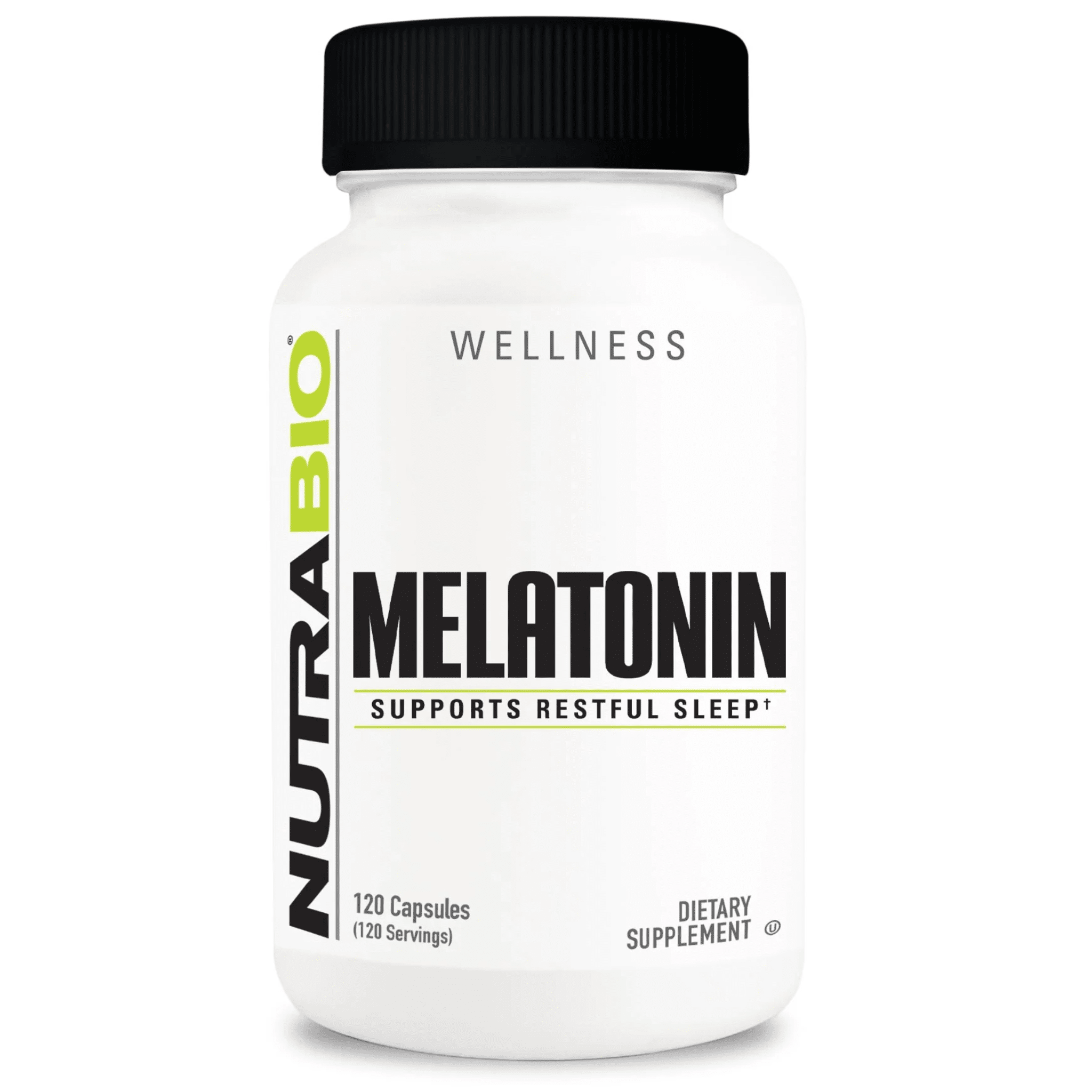
NutraBio Melatonin
Single-ingredient melatonin with no fillers, binders or excipients. Fully disclosed label, third-party tested.
⚠ The most important thing about melatonin: less works better than more
This is the single most useful piece of information we can give you about this product, and it runs directly against how melatonin is sold.
Melatonin is not a sedative. It is a timing signal.
Your body produces melatonin as darkness falls, and that rise tells your internal clock that night has begun. It does not knock you out — it tells your body when to be ready for sleep.
The amount your body releases naturally is very small — measured in fractions of a milligram. Yet most melatonin sold in shops comes in 5mg or 10mg doses, which is many times the physiological amount.
Research has repeatedly found that lower doses work as well or better than higher ones for sleep onset, with fewer side effects. Doses in the region of 0.5mg to 1mg are frequently more effective than 5 or 10mg.
Why more can be worse:
- Grogginess the next morning is dose-dependent. A large dose is still circulating when your alarm goes off
- Vivid dreams and disturbed sleep are commonly reported at higher doses
- Receptor desensitisation. Flooding a receptor system persistently is a poor long-term strategy
Practical advice: start with the smallest dose you can, and if your tablets are large, split them. More is not better here — it is one of the clearest examples in the whole supplement category.
Timing matters more than dose
Because melatonin is a signal rather than a sedative, when you take it does more work than how much you take.
- For normal sleep onset: 30 to 60 minutes before bed
- For jet lag travelling east: take it in the evening at your destination's local time to pull your clock earlier. This is the use with the strongest evidence
- For shift work: take it before your intended sleep period, whenever that falls
- For delayed sleep phase — the pattern where you cannot fall asleep until very late — small doses taken several hours before your target bedtime are more effective than a large dose at bedtime
⚠ And do not undo it with light. Melatonin signals darkness. Taking it and then looking at a bright screen sends contradictory instructions, and the light will generally win. Dim the lights when you take it.
What melatonin is genuinely good for — and what it is not
Strongest evidence:
- Jet lag. This is where melatonin performs best, and it is genuinely useful
- Shift work adaptation
- Delayed sleep phase, where the clock is genuinely shifted late
- Reducing time to fall asleep, though the effect size is generally modest — often in the region of several minutes rather than transformative
Weaker evidence:
- Staying asleep. Melatonin helps you start sleeping rather than continue sleeping. If your problem is waking at 3am, this is probably not your answer
- Sleep quality in people whose circadian rhythm is already normal
The honest framing: melatonin is excellent at moving your body clock and modest at making you sleepy. If your issue is a shifted schedule, it is the right tool. If your issue is stress, caffeine too late, or an inconsistent bedtime, fix those first — melatonin will not out-run them.
Specs
| Melatonin | Single ingredient |
| Other ingredients | None beyond the capsule |
| Label | Fully disclosed, no proprietary blends |
| Testing | Third-party tested, published at checkmysupps.com |
Third-party testing matters unusually much with melatonin. Independent analyses of retail melatonin products have repeatedly found actual content varying widely from the label — sometimes far above, sometimes far below. A brand that publishes its lab results is worth something here.
How to take it
- Start with the lowest dose you can and only increase if genuinely needed.
- 30 to 60 minutes before bed, with the lights dimmed.
- Not in the middle of the night if you wake — you will still have it circulating in the morning.
- Use it for a purpose rather than by default. Jet lag, shift changes, or a genuinely disrupted schedule.
- Do not drive after taking it.
Who this is for
- Anyone travelling across time zones — the clearest and best-supported use
- Shift workers adjusting sleep periods
- People whose sleep has drifted late and want to pull it back
- Anyone who wants a single-ingredient product with published lab results
- People who take melatonin occasionally rather than nightly
Who this is not for
If you wake at 3am and cannot get back to sleep, melatonin is unlikely to help — it works on falling asleep rather than staying asleep. Magnesium is worth trying instead.
If your sleep problem is stress, caffeine or an inconsistent schedule, address those first. Melatonin will not compensate.
Anyone taking sedatives, blood thinners, blood pressure medication, immunosuppressants or diabetes medication — speak to your doctor, as melatonin interacts with several drug classes.
Anyone with an autoimmune condition, without medical advice.
Anyone who needs to drive or operate machinery after taking it.
If you find yourself needing it every night indefinitely, that is worth a conversation with a doctor rather than an ongoing supplement.
Not for anyone under 18, pregnant or nursing.
Stack it with: magnesium, which works on relaxation through a completely different route.
Frequently asked questions
How much melatonin should I take?
Less than you probably think. Research repeatedly finds 0.5 to 1mg works as well or better than 5 to 10mg for sleep onset, with fewer side effects. Start low.
Why do I feel groggy the next morning?
Almost always the dose. Grogginess is dose-dependent — a large dose is still circulating when you wake. Reduce it.
Is melatonin a sedative?
No. It is a timing signal that tells your body clock night has begun. It makes you ready for sleep rather than knocking you out.
When should I take it?
30 to 60 minutes before bed, with the lights dimmed. Bright light after taking it sends the opposite signal.
Will it help me stay asleep?
Generally not. Melatonin helps with falling asleep. Waking at 3am is usually a different problem.
Does it work for jet lag?
Yes — this is where the evidence is strongest. Take it in the evening at your destination's local time.
Can I take it every night?
It is better used for a purpose than by default. If you need it indefinitely, that is worth discussing with a doctor.
Why does third-party testing matter here?
Independent analyses of retail melatonin have repeatedly found actual content varying widely from the label. Published lab results are genuinely worth something in this category.
You may also like
Recently viewed
- Opens in a new window.