

Description
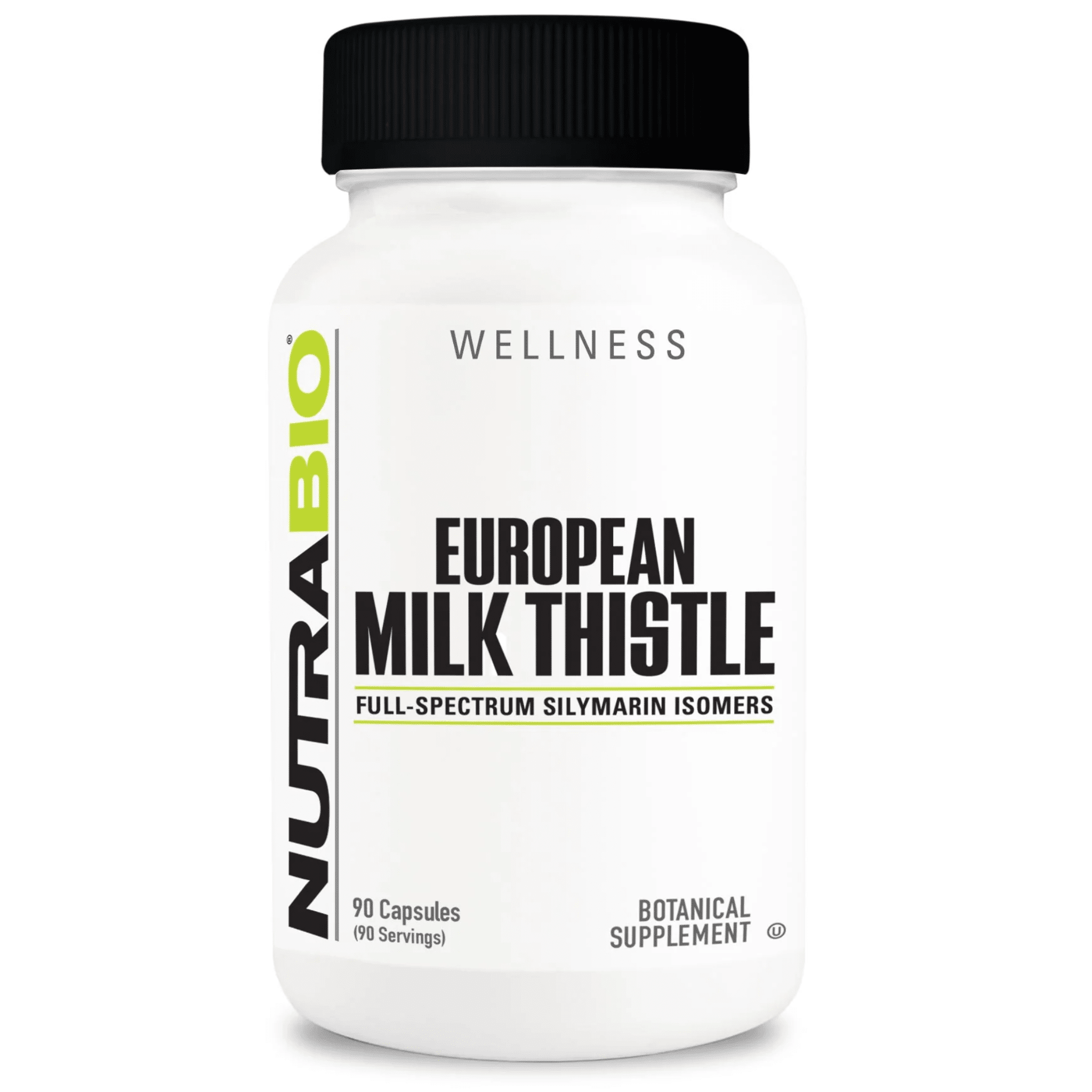
NutraBio Milk Thistle
Milk thistle (Silybum marianum) extract standardised for silymarin content. Single ingredient, no fillers or excipients.
Why standardisation is the whole question with milk thistle
Milk thistle is one of the more genuinely researched botanicals available — but only when the right part is measured.
The active compounds are a group collectively called silymarin, a complex of flavonolignans concentrated in the seeds. The most studied of these is silybin.
Here is why that matters: raw milk thistle seed powder contains only a small proportion of silymarin. Extracts are standardised to concentrate it — commonly to 80%.
So a product listing "1,000mg milk thistle" with no standardisation figure could contain a tiny fraction of the active compounds that a smaller, standardised dose delivers. The number to look for on any milk thistle bottle is the silymarin percentage, not the total milligrams.
This is the same principle as the alpha-GPC standardisation issue on our Alpha-GPC page — and it catches people out just as often.
What the research actually supports
Milk thistle has a longer research history than most botanicals, and it is worth separating the well-supported from the speculative.
Better supported:
- Antioxidant activity in liver tissue. Silymarin appears to support glutathione levels — glutathione being the body's principal endogenous antioxidant, and central to liver detoxification
- Membrane stabilisation. Silymarin is studied for its effect on hepatocyte cell membranes, which is the proposed mechanism behind its protective role
- Clinical use in liver conditions. Silymarin has been studied in various forms of liver disease, and it has a long history of medical use in Europe
Less established: claims about "detoxing", clearing toxins, or general cleansing. Your liver detoxifies continuously without assistance, and no supplement makes that happen faster in a healthy person. Milk thistle is better understood as supporting liver tissue than as a cleanse.
Who actually uses this, and why
We stock milk thistle for some specific and practical reasons:
- Alongside prohormone or designer anabolic cycles. Oral compounds of that type place genuine strain on the liver, and on-cycle liver support is standard practice — see our Decabolin page for the fuller picture
- Anyone who drinks regularly. Alcohol is metabolised by the liver, and milk thistle is among the most commonly used supports
- People taking regular medication, much of which is processed hepatically
- Anyone taking high-dose supplements long term, where liver load is a reasonable consideration
⚠ To be clear about what it does not do: milk thistle does not make it safe to take something that is not safe. If you are running an oral compound that stresses your liver, milk thistle is a support measure alongside bloodwork and sensible cycle length — not a licence.
⚠ Cautions worth knowing
It is in the daisy family. Silybum marianum belongs to Asteraceae, alongside ragweed, chrysanthemums, marigolds and daisies. If you have hay fever or react to those plants, allergic reactions to milk thistle are documented.
It may affect drug metabolism. Silymarin can influence liver enzymes involved in processing medications. If you take any prescription drug, speak to your doctor or pharmacist first — this is a real consideration precisely because milk thistle acts on the organ that clears most medication.
Possible oestrogenic activity. Some research suggests silymarin may have mild oestrogen-like effects, which is worth knowing for anyone with a hormone-sensitive condition.
Diabetes. Milk thistle has been studied in relation to blood glucose, so monitor levels if you are diabetic.
Specs
| Milk Thistle | Standardised silymarin extract |
| Other ingredients | None beyond the capsule |
| Label | Fully disclosed, no proprietary blends |
| Testing | Third-party tested, published at checkmysupps.com |
How to take it
- Follow the label. Doses vary considerably by standardisation, so the bottle is the guide rather than a general figure.
- With food. Silymarin is poorly water-soluble, and fat improves absorption.
- Split across the day if you are taking multiple servings, since silymarin clears reasonably quickly.
- Consistently if you are using it as on-cycle support — not occasionally.
- Alongside bloodwork, not instead of it, if liver stress is the reason you are taking it.
Who this is for
- Anyone running an oral prohormone or designer anabolic cycle
- People who drink regularly
- Anyone on long-term medication processed by the liver
- People taking high-dose supplements over extended periods
- Anyone who wants a standardised extract rather than raw seed powder
Who this is not for
Anyone allergic to ragweed, daisies, marigolds or chrysanthemums — milk thistle is in the same plant family.
Anyone taking prescription medication, without checking with a doctor or pharmacist. Silymarin can affect the enzymes that process drugs.
Anyone with a hormone-sensitive condition, given the possible oestrogenic activity.
Anyone hoping it will "detox" them. Your liver does that continuously, and no supplement accelerates it in a healthy person.
Diabetics should monitor blood glucose.
Not for anyone under 18, pregnant or nursing.
Stack it with: Revive MD Liver if you want a fuller liver support formula with NAC and TUDCA alongside milk thistle.
Frequently asked questions
What is silymarin?
The group of flavonolignans that are milk thistle's active compounds, concentrated in the seeds. Silybin is the most studied of them.
Why does standardisation matter?
Raw seed powder contains only a small proportion of silymarin. A product listing total milligrams without a standardisation percentage may contain far less active material than a smaller standardised dose.
Does milk thistle detox your liver?
Your liver detoxifies continuously without help. Milk thistle is better understood as supporting liver tissue — through antioxidant activity and membrane stabilisation — than as a cleanse.
Should I take it with a prohormone cycle?
On-cycle liver support is standard practice with oral compounds. But it is a support measure alongside bloodwork and sensible cycle length, not a licence to run something unsafe.
Should I take it with food?
Yes. Silymarin is poorly water-soluble and fat improves absorption.
Can I take it with medication?
Check with your doctor or pharmacist. Silymarin can affect the liver enzymes that process many drugs.
Any allergy risk?
Yes — milk thistle is in the daisy family, alongside ragweed and chrysanthemums. Reactions are documented in people sensitive to those.
How long should I take it?
For cycle support, for the duration of the cycle. For general use, it is commonly taken continuously, though periodic breaks are sensible with any botanical.
You may also like
Recently viewed
- Opens in a new window.