

Description
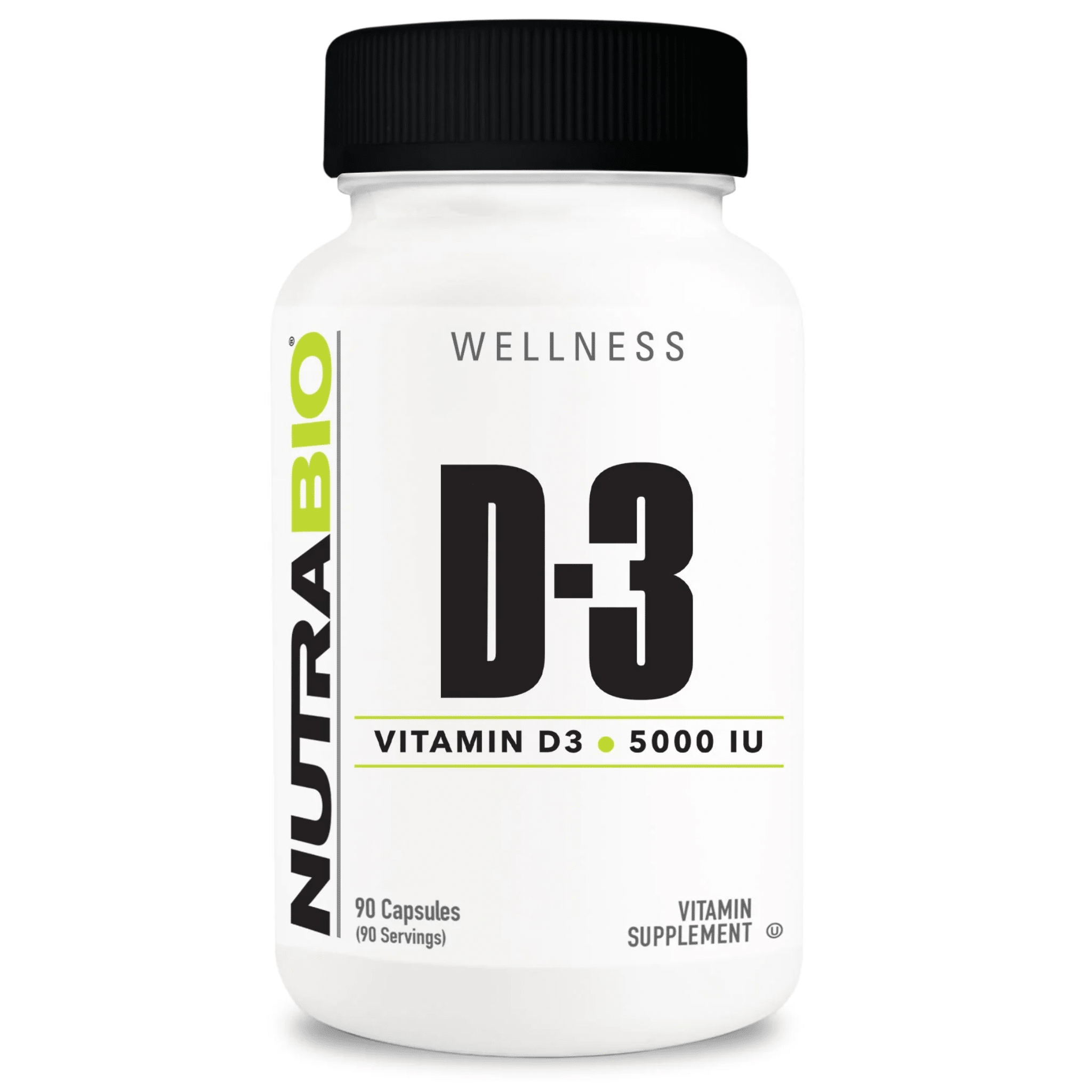
NutraBio Vitamin D3
5,000 IU of vitamin D3 (cholecalciferol) per capsule, 120 capsules. Single ingredient, no fillers.
This is one of the few supplements where deficiency is genuinely widespread
We are sceptical of most "everyone is deficient" claims. Vitamin D is the exception, and the reason is structural rather than dietary.
Your body makes vitamin D from sunlight — specifically UVB striking bare skin. Several things get in the way of that:
- Latitude. Above roughly 37°N — which includes all of Pennsylvania — the sun sits too low from about October to March for meaningful UVB to reach the ground. You can stand outside all day in January and make almost none
- Indoor life. Most people work indoors, and glass blocks UVB entirely
- Sunscreen blocks the wavelength responsible
- Skin tone. Melanin is protective against UV, which also means darker skin requires substantially longer exposure to produce the same amount
- Age. The skin's capacity to synthesise vitamin D declines over time
And food does not fill the gap. Very few foods contain meaningful vitamin D — oily fish, egg yolks and fortified dairy are essentially the list, and you would need to eat oily fish most days.
Why it matters beyond bone health
Vitamin D is usually filed under bone health, and that is real — it governs calcium absorption, and without it dietary calcium is largely wasted.
But vitamin D functions more like a hormone than a vitamin. Receptors for it appear in tissues throughout the body, which is why the research spans:
- Immune function. The most active area, and part of why deficiency is associated with more frequent respiratory infections
- Muscle function and strength. Vitamin D receptors are present in muscle tissue, and deficiency is associated with weakness
- Testosterone. Low vitamin D status is associated with lower testosterone — correcting a deficiency can help, though supplementing beyond sufficiency will not
- Mood. The seasonal pattern of low mood overlaps closely with the seasonal pattern of vitamin D status
⚠ Three things worth knowing before you take it
1. It is fat-soluble, so take it with a meal containing fat. Taking vitamin D on an empty stomach or with a low-fat breakfast substantially reduces absorption. This is the most common mistake, and it is free to fix.
2. Consider pairing it with vitamin K2. Vitamin D increases calcium absorption; vitamin K2 helps direct that calcium into bone rather than soft tissue. The two are increasingly taken together for that reason, and at 5,000 IU it is worth considering.
3. Test rather than guess. This is the one supplement where a blood test is genuinely worth it, because it is fat-soluble and stored in the body rather than excreted. 25-hydroxyvitamin D is a cheap, standard test. Sufficiency is generally cited above 30 ng/mL, with many practitioners targeting 40–60.
On the 5,000 IU dose
5,000 IU is a therapeutic dose, not a maintenance one. The RDA sits at 600–800 IU, and the tolerable upper intake level for adults is generally cited at 4,000 IU daily from all sources.
That does not make 5,000 IU unreasonable — it is a very commonly used correction dose, and many people with confirmed deficiency are advised higher still. But it does mean two things:
- It is worth confirming you are low rather than assuming
- Count your other sources. Multivitamins, fish oil products and greens powders frequently contain vitamin D
Vitamin D toxicity is rare but real, and because it accumulates, it comes from sustained very high intake rather than one large dose. Retesting after three months of supplementation is sensible.
D3 rather than D2
Worth knowing when comparing products. D3 (cholecalciferol) is the form your skin produces and the form in animal foods. D2 (ergocalciferol) comes from plant and fungal sources.
D3 raises and maintains blood levels more effectively than D2, which is the reason it is the standard choice. If a label says only "vitamin D", check which.
Specs
| Vitamin D3 | 5,000 IU (cholecalciferol) per capsule |
| Capsules | 120 |
| Other ingredients | None beyond the capsule |
| Label | Fully disclosed, no proprietary blends |
| Testing | Third-party tested, published at checkmysupps.com |
How to take it
- One capsule daily with a meal containing fat. This matters more than people realise.
- Morning or evening is fine, though some people find vitamin D late in the day affects sleep.
- Every day. Levels build gradually over weeks.
- Consider adding K2, particularly at this dose.
- Retest after about three months and adjust.
- You may need less in summer if you spend real time outdoors.
Who this is for
- Anyone living at northern latitudes through autumn and winter — that is all of Pennsylvania
- People who work indoors
- Anyone with darker skin, who needs substantially more sun exposure for the same synthesis
- Older adults, whose skin synthesises less
- People with confirmed low vitamin D on a blood test
- Athletes — vitamin D receptors are present in muscle tissue
Who this is not for
Anyone who has not checked their level and already takes vitamin D in a multivitamin. Add up your total first.
Anyone with high blood calcium, sarcoidosis or certain kidney conditions — speak to your doctor, as vitamin D increases calcium absorption.
If you spend substantial time outdoors in summer with bare skin, you may need less during those months.
If you take digoxin or thiazide diuretics, check with your doctor — both interact with calcium levels.
Not for anyone under 18, pregnant or nursing without medical advice.
Stack it with: vitamin K2, magnesium — which is required for vitamin D metabolism — and zinc.
Frequently asked questions
Should I take vitamin D with food?
Yes, with a meal containing fat. It is fat-soluble, and taking it on an empty stomach substantially reduces absorption.
Is 5,000 IU too much?
It is a correction dose rather than a maintenance one — the upper intake level from all sources is generally cited at 4,000 IU. It is very commonly used, but worth confirming you are low and counting other sources.
How do I know if I am deficient?
A 25-hydroxyvitamin D blood test. Sufficiency is generally cited above 30 ng/mL, with many practitioners targeting 40–60.
Why can't I just get it from the sun?
Above roughly 37°N, which includes Pennsylvania, the sun is too low from around October to March for meaningful UVB to reach the ground.
What is the difference between D2 and D3?
D3 is the form your skin makes and is more effective at raising and maintaining blood levels. D2 comes from plant and fungal sources.
Should I take K2 with it?
It is worth considering, particularly at 5,000 IU. Vitamin D increases calcium absorption; K2 helps direct that calcium into bone.
Can I take too much?
Yes. Vitamin D is stored rather than excreted, so toxicity comes from sustained high intake. Retest after about three months.
Does it raise testosterone?
Correcting a deficiency can help, since low vitamin D status is associated with lower testosterone. Supplementing beyond sufficiency will not.
Nutra Bio - Vitamin D
High quality d3 can’t beat the price.
You may also like
Recently viewed
- Opens in a new window.