


Description
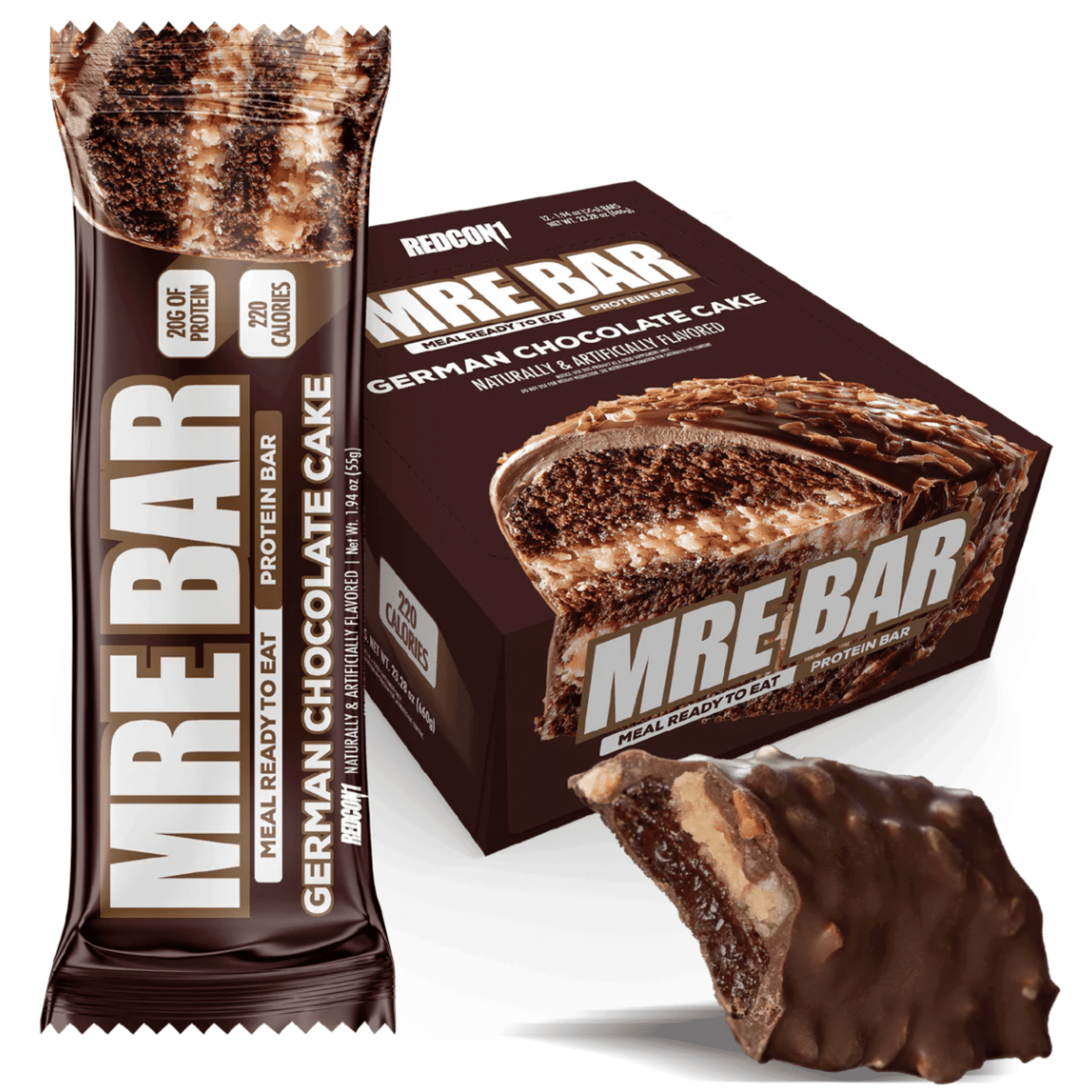
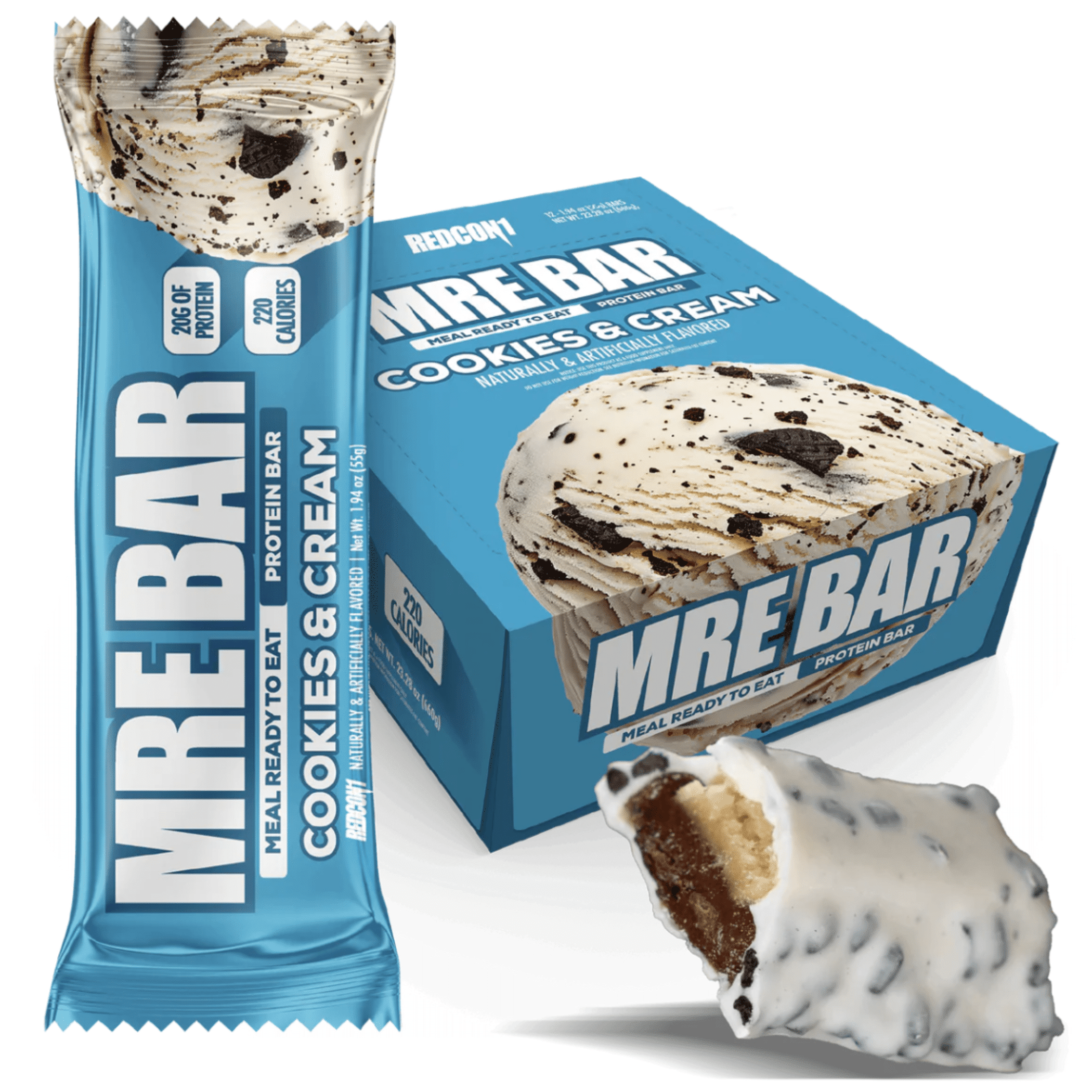
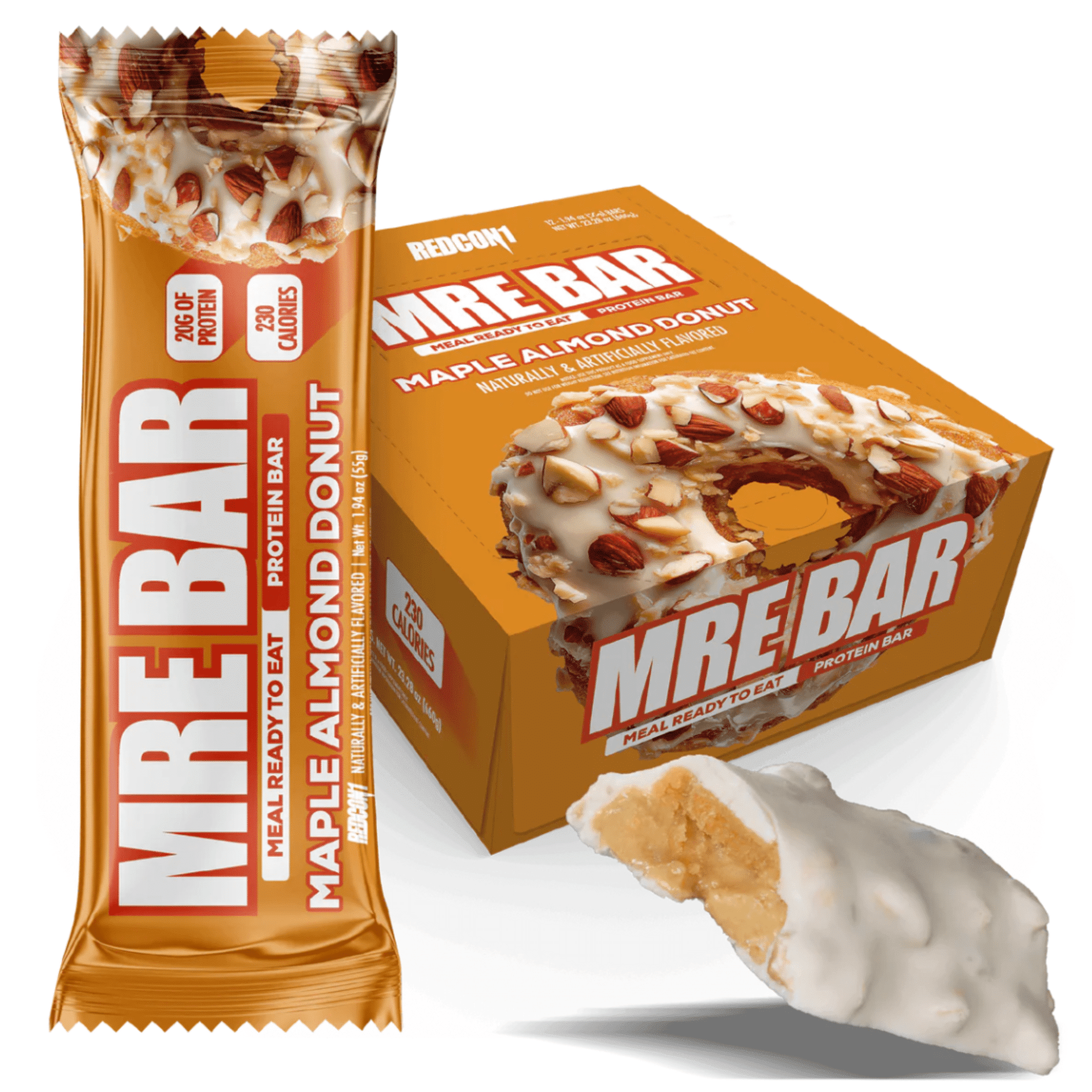
RedCon1 MRE Bar
A protein bar built on the same whole-food protein premise as MRE — and one known for eating like a dessert rather than a supplement.
What a protein bar is genuinely for
Worth setting expectations, because bars are frequently bought for the wrong reason.
A protein bar is a convenience food, not a health food. It is a manufactured product with a long ingredient list, and no bar beats a chicken breast and a bowl of rice on nutritional grounds.
What it beats is the realistic alternative:
- Skipping the meal entirely, which is what usually happens
- A vending machine or petrol station
- Arriving home starving and eating far too much
- A chocolate bar, which is the honest comparison for most people reaching for one
Against those it wins comfortably, and consistency across a week matters more than any single meal being ideal.
⚠ How to read a protein bar label
This is where bars mislead most, and the checks are simple.
1. Sugar alcohols and "net carbs." Many bars advertise low net carbs by subtracting sugar alcohols — maltitol, erythritol, sorbitol — from the total.
- The subtraction is not entirely honest. Maltitol in particular is partially absorbed and does raise blood glucose, though less than sugar
- ⚠ And sugar alcohols cause digestive distress in a lot of people — bloating, gas and worse. Maltitol is the main offender; erythritol is generally better tolerated
- If a bar has ever caused you problems, this is almost certainly why
2. Where the protein comes from. Whole-food or dairy protein sources are preferable to a bar padded with collagen or gelatin — collagen is an incomplete protein, lacking tryptophan and low in leucine, so it should not count toward your protein target.
3. Protein per calorie. A 400-calorie bar with 20g of protein is a snack with protein in it. A 250-calorie bar with 20g is a protein bar.
4. Fibre source. Chicory root fibre and inulin are common, genuinely count as fibre, and also cause gas in some people at higher intakes.
The whole-food protein angle
MRE products use whole-food protein sources rather than isolated whey — typically beef, chicken, salmon, egg and pea.
What that changes: a broader amino acid profile, slower digestion, and less dependence on dairy. Slower digestion is an advantage in a bar specifically, since a bar is usually filling a gap between meals rather than being taken around training — you want it to hold you, not clear quickly.
The honest note: whole-food protein costs more per gram, and the amino profile advantage is modest if your overall diet is varied.
Where bars fit, and where they do not
Genuinely useful:
- In a bag, car or desk, for the days that get away from you
- Travel, where the food options are poor
- Between meals when the gap would otherwise be five or six hours
- As a dessert that fits your macros while dieting
- Anyone who struggles to hit protein from food alone
Less useful: as a routine meal replacement, as a post-workout protein where speed matters, or as your primary protein source. Whey isolate is far cheaper per gram, and real food is better.
Specs
| Protein | Whole-food sources — check the panel |
| Format | Bar |
| ⚠ Check for | Sugar alcohols, and protein per calorie |
| ⚠ Allergens | Check for egg, fish, milk and nuts |
How to eat it
- Between meals, or when a proper meal is not realistic.
- Try one before buying a box — sugar alcohol tolerance varies enormously between people.
- Drink water with it. Bars are dense and low in moisture.
- Count it toward your daily totals as food, because that is what it is.
- Not as your main protein source — powder and real food are both cheaper.
Who this is for
- Anyone whose schedule regularly means missing meals
- People who travel or drive for work
- Anyone who wants something to keep in a bag for emergencies
- People dieting who want a dessert that fits their macros
- Anyone who finds whey sits heavily
Who this is not for
⚠ Anyone sensitive to sugar alcohols. Try one bar before committing to a box.
Anyone using it as a primary protein source. Whey isolate costs far less per gram.
Anyone wanting fast protein around training. Whole-food protein in a solid bar is slow by design.
Anyone with nut, egg, fish or milk allergies, depending on the version — check the panel.
Anyone treating it as a health food rather than a convenience food.
Not for anyone under 18 without medical advice.
Stack it with: nothing needed — it is food. If you are using it as a meal, that is the job done.
Frequently asked questions
Are protein bars healthy?
They are convenience foods rather than health foods. What matters is the alternative — against a skipped meal, a vending machine or a chocolate bar, they win comfortably.
Why do protein bars upset my stomach?
Almost always sugar alcohols, maltitol in particular. Erythritol is generally better tolerated, and chicory root fibre can also cause gas at higher intakes.
What are net carbs?
Total carbohydrate minus fibre and sugar alcohols. The subtraction is not entirely honest — maltitol is partially absorbed and does raise blood glucose, though less than sugar.
How do I judge a bar?
Check the protein source, protein per calorie, sugar alcohol content and fibre source. A 400-calorie bar with 20g of protein is a snack with protein in it.
Does collagen in a bar count as protein?
No. Collagen is an incomplete protein — no tryptophan, low leucine — so it should not count toward your target.
Can I use it post-workout?
You can, but whole-food protein in a solid bar digests slowly. A shake is better if speed matters.
Can it replace a meal?
Occasionally, yes. Routinely, no — real food brings fibre, micronutrients and satiety a bar cannot match.
Should I buy a box straight away?
Try one first. Sugar alcohol tolerance varies enormously.
You may also like
Recently viewed
- Opens in a new window.