
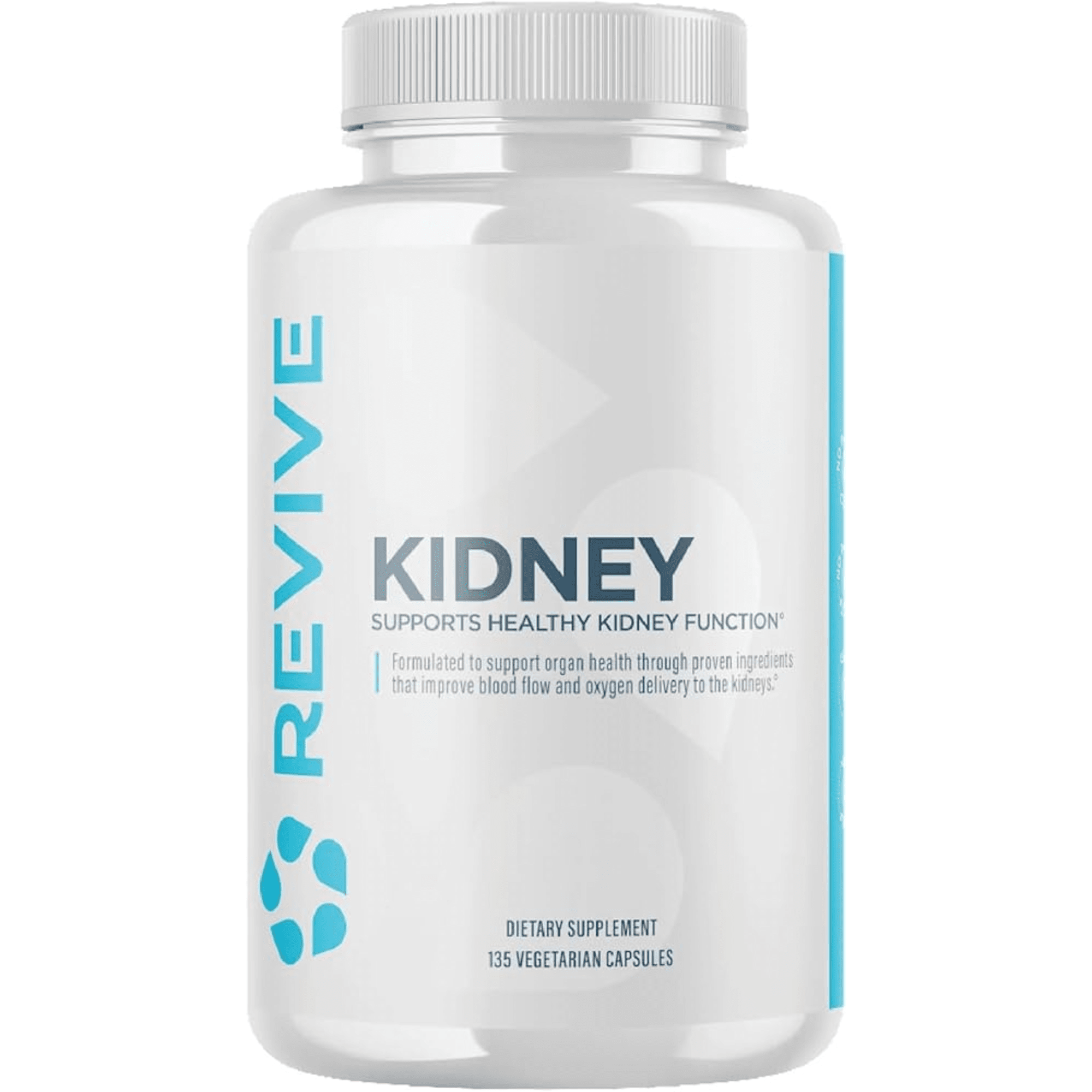

Description
Revive MD Kidney
A renal support formula aimed at people running high protein intakes, heavy supplement loads, or both.
About Revive MD
Revive MD was founded by Domenic Iacovone and Dr Matt Rhodes, and the range is built around a specific idea: that the health markers underpinning performance are worth supporting directly rather than only chasing performance itself.
That is why their catalogue reads like organ systems rather than gym goals — Liver, Kidney, Heart, GI, Lipid, Blood Pressure. They sell health products to people the industry usually only sells stimulants to, and that is the reason we stock them.
What your kidneys actually do
Worth understanding, because it explains why lifters think about them at all.
Your kidneys filter your entire blood volume many times a day, removing metabolic waste and regulating what stays and what goes.
- Filtering nitrogenous waste — urea and creatinine, both products of protein and creatine metabolism
- Fluid and electrolyte balance, including sodium and potassium
- Blood pressure regulation, via the renin-angiotensin system
- Acid-base balance
- Red blood cell production, by producing erythropoietin
The relevance for lifters: a high-protein diet increases the nitrogenous waste your kidneys handle. That is workload rather than damage — but it is a real reason the topic comes up.
⚠ The most important thing on this page: creatine and creatinine
This causes genuine, avoidable alarm, and almost nobody is told about it.
Kidney function is commonly estimated using serum creatinine. And creatinine is a breakdown product of creatine — so taking creatine raises your creatinine level regardless of how well your kidneys are working.
That means a healthy lifter taking creatine can produce a blood result that looks like impaired kidney function when nothing is wrong. People have been sent for unnecessary investigation, and some have stopped taking creatine on that basis.
What to do:
- Tell your doctor you take creatine before any blood panel. This is the single most useful thing on the page
- Ask about cystatin C if there is doubt — it is an alternative marker of kidney function that is not affected by creatine or muscle mass
- High muscle mass raises creatinine too, entirely separately from supplementation, which compounds the effect in lifters
⚠ On high protein and kidney damage
Worth addressing directly, because the belief is widespread.
In people with healthy kidneys, high protein intake has not been shown to cause kidney damage. Reviews of the evidence in athletes and healthy adults consistently find no harm at intakes well above the general recommendation.
The genuine caveat: in people who already have reduced kidney function, protein restriction is a standard part of medical management. So the advice differs entirely depending on whether your kidneys are healthy — which is exactly why knowing your numbers matters.
Where a support formula makes more sense is for anyone running oral compounds, high-dose supplements, NSAIDs regularly, or dehydration through hard training in heat.
⚠ This is a category where bloodwork is the point
These markers are invisible. You cannot feel your kidney function, your blood pressure or your liver enzymes — people feel fine right up until they do not. That is precisely why they are measured rather than sensed.
Which has two consequences:
- Without a baseline, you cannot know whether anything worked. There is no feeling to judge it by
- If your numbers are genuinely out of range, that is a conversation with your doctor rather than a supplement purchase. A support formula is a reasonable addition to good habits. It is not a treatment, and we will not sell it to you as one
Our staff earn no commission, which is why we would rather tell you to get tested than tell you to buy a second bottle.
What actually protects your kidneys
- Hydration. By a wide margin the most important, and free. Dehydration concentrates everything your kidneys are filtering
- Blood pressure control. High blood pressure is one of the leading causes of kidney disease
- Blood glucose control. Diabetes is the other leading cause
- ⚠ Moderating NSAIDs. Regular ibuprofen use is genuinely hard on kidneys, and lifters take a lot of it
- Caution with oral compounds, alongside bloodwork
Specs
| Type | Renal support formula |
| Stimulants | None |
| Label | Fully disclosed |
How to take it
- Follow the label, with plenty of water — hydration is doing more than the capsules are.
- Daily and consistently.
- Retest after about three months and judge it on numbers rather than feel.
- ⚠ Speak to your doctor first if you take any medication, particularly for blood pressure — many act on the kidneys directly.
Who this is for
- Anyone running very high protein alongside heavy supplement loads
- People using or recovering from oral compounds
- Anyone who takes NSAIDs frequently
- People training hard in heat, where dehydration is recurrent
- Anyone whose bloodwork has flagged something borderline, alongside medical advice
Who this is not for
Anyone with diagnosed kidney disease, as a substitute for medical treatment. Speak to your doctor — several supplement ingredients are actively unsuitable in that situation.
Anyone taking blood pressure medication, without checking. ACE inhibitors, ARBs and diuretics all act on the kidneys.
Anyone who has never had bloodwork. Without numbers there is no way to know whether it did anything.
Anyone who thinks it substitutes for drinking enough water. It does not.
Not for anyone under 18, pregnant or nursing.
Stack it with: water, first. Then Blood Pressure if that is a concern, since hypertension is a leading cause of kidney damage.
Frequently asked questions
Does creatine damage my kidneys?
In healthy people, no — decades of research support that. But creatine raises serum creatinine, the marker used to estimate kidney function, so results can look concerning when nothing is wrong. Tell your doctor you take it.
What is cystatin C?
An alternative marker of kidney function that is not affected by creatine or muscle mass. Worth asking about if a creatinine result is unclear.
Does high protein damage kidneys?
In people with healthy kidneys, the evidence does not support that. In people who already have reduced function, protein restriction is standard medical management — which is why knowing your numbers matters.
Will I feel it working?
No. Kidney markers are invisible, which is why they are measured. Judge it on bloodwork after about three months.
What protects kidneys most?
Hydration by a wide margin, then blood pressure control, blood glucose control, and moderating NSAID use.
Are NSAIDs really a problem?
Regular ibuprofen use is genuinely hard on kidneys, and lifters take a lot of it. Worth moderating.
Can I take it with blood pressure medication?
Speak to your doctor first. ACE inhibitors, ARBs and diuretics all act directly on the kidneys.
Does it replace drinking water?
No. Hydration is the single most protective thing, and it is free.
You may also like
Recently viewed
- Opens in a new window.