

Description
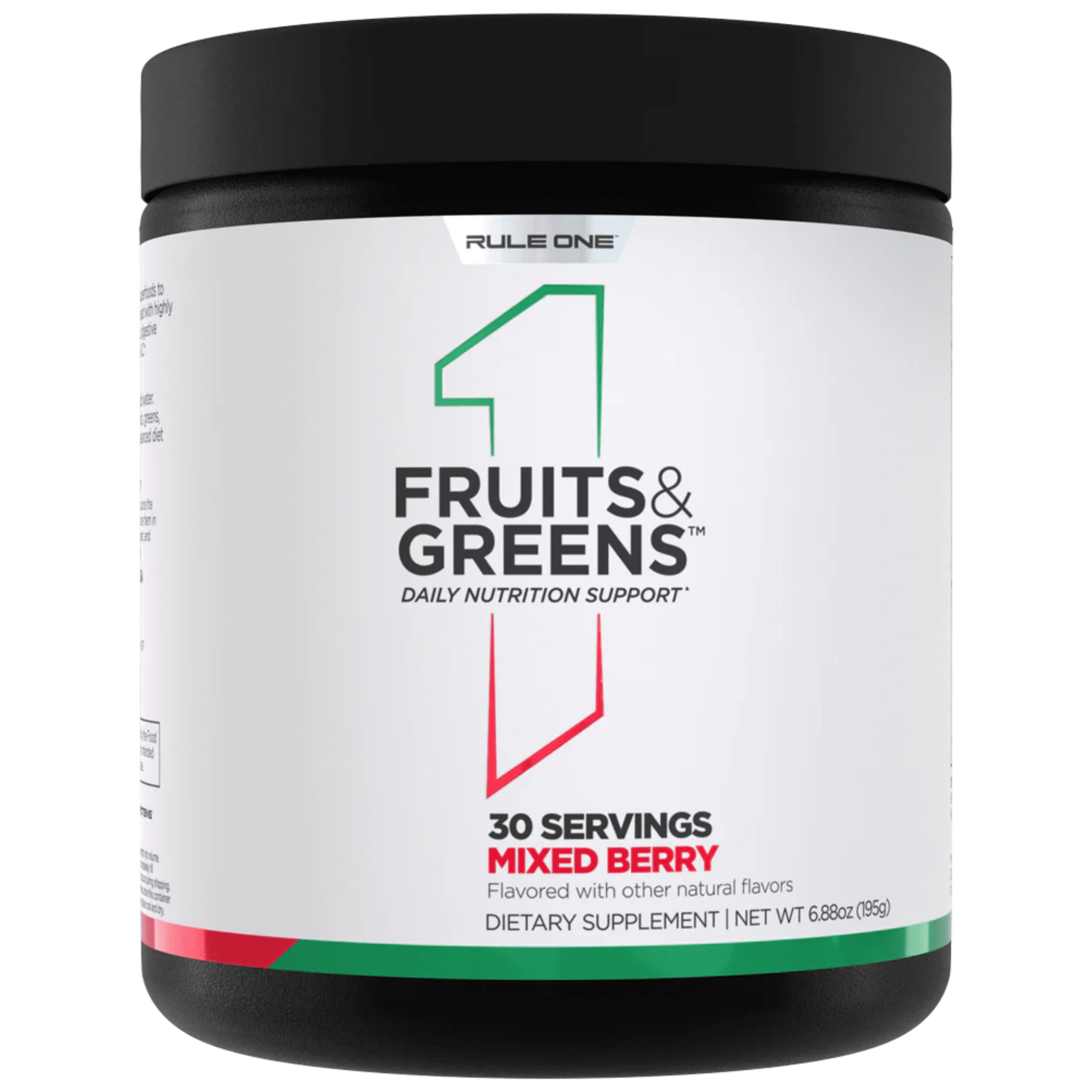
Rule One Fruits & Greens
A daily fruit and vegetable powder combining concentrated produce with supporting nutrients.
The honest position on greens powders
This is a category built on guilt, so we would rather be straight with you than sell you absolution.
A greens powder is not a substitute for eating vegetables. Real produce brings things a powder cannot:
- Fibre in meaningful quantities. Most greens powders contain very little, and fibre is one of the main reasons vegetables matter
- Volume and satiety. A plate of vegetables fills you up; a scoop of powder does not
- Water content, which contributes to hydration and fullness
- The full matrix of compounds in whole food, much of which is lost in processing and drying
So what is it genuinely good for?
Insurance. If your vegetable intake is honestly poor — and for a lot of people who train, it is — a greens powder provides some of the micronutrients and plant compounds you are otherwise missing entirely. Something beats nothing, and consistency beats intention.
That is a modest claim, and it is the true one. Our staff earn no commission, so nobody here benefits from telling you a scoop replaces a salad.
How to read a greens powder label
This category has more marketing per gram than almost any other, so here are the checks that matter:
- ⚠ Look for a proprietary blend. Greens powders are the worst offenders. A label listing forty ingredients under a single "Super Greens Blend 3,000mg" tells you nothing — forty ingredients in 3,000mg averages 75mg each, which is a dusting
- Check where the ingredient list starts. Ingredients are listed by weight, so whatever appears first dominates. If it is a cheap filler rather than a green, that is your answer
- Look for probiotics with a CFU count, and digestive enzymes, which are the additions that genuinely differentiate products
- Check the fibre content. Frequently near zero, and worth knowing
- Standardised extracts beat raw powders — the same principle as our tongkat ali and milk thistle pages
What greens powders actually contain
- Vegetable and fruit concentrates — spinach, kale, broccoli, beet, berries. Dried and powdered, so vitamin content varies with processing
- Algae — spirulina and chlorella, which are genuinely nutrient-dense
- Grasses — wheatgrass and barley grass
- Probiotics, where a stated CFU count is worth something
- Digestive enzymes, which help with the powder itself
- Antioxidant-rich extracts such as green tea
⚠ One thing worth knowing about beet-containing greens powders: if yours contains beet root or another nitrate source and you take it before training, skip antibacterial mouthwash. The first step converting nitrate to nitrite is performed by bacteria on your tongue, and mouthwash kills them.
Specs
| Type | Fruit and vegetable powder |
| Stimulants | Check the panel — some contain green tea extract |
| ⚠ Check for | Proprietary blends, fibre content, probiotic CFU |
Rule One's range is widely Informed Choice certified — worth checking your tub if you are a tested athlete, since greens powders contain many botanical ingredients.
How to take it
- Once daily, mixed into water or a shake.
- Any time. Check for green tea extract if you are sensitive to caffeine late in the day.
- Alongside vegetables, not instead of them.
- ⚠ Away from your multivitamin if you take one — check for overlap rather than doubling up on the same nutrients.
- Expect a strong taste. Concentrated vegetables taste like concentrated vegetables.
Who this is for
- Anyone whose vegetable intake is honestly poor
- People who travel frequently, where produce is hard to come by
- Anyone eating a repetitive diet — common among people who train
- People in a deficit, where food volume is restricted
- Anyone who wants some micronutrient insurance without a multivitamin
Who this is not for
Anyone eating plenty of vegetables already. The incremental benefit is small, and we will say so.
Anyone treating it as a replacement for produce. Fibre, volume and satiety all come from real food.
Anyone already taking a multivitamin, without checking for overlap.
Anyone on warfarin — greens are high in vitamin K, which directly affects how warfarin works. Speak to your doctor.
Anyone with a thyroid condition should know cruciferous vegetables and algae can affect iodine and thyroid function at high intakes.
Not for anyone under 18, pregnant or nursing without medical advice.
Stack it with: actual vegetables. Beyond that, fish oil and vitamin D cover what greens do not.
Frequently asked questions
Can a greens powder replace vegetables?
No. Real produce brings fibre, volume, water and the full matrix of whole-food compounds. A greens powder is insurance for when your intake is genuinely poor.
How do I judge a greens powder?
Check for a proprietary blend — forty ingredients under one 3,000mg total averages 75mg each. Then check where the ingredient list starts, the fibre content, and whether probiotics carry a stated CFU count.
Does it contain much fibre?
Usually very little, which is one of the main gaps between a powder and actual vegetables. Check the panel.
Can I take it with a multivitamin?
Check for overlap first — many greens powders include added vitamins and minerals.
Why does it taste like that?
Concentrated vegetables taste like concentrated vegetables. Mixing it into juice or a shake helps.
Does it contain caffeine?
Some contain green tea extract. Check the panel if you are sensitive or taking it late in the day.
Can I take it with warfarin?
Speak to your doctor. Greens are high in vitamin K, which directly affects how warfarin works.
Should I skip mouthwash?
If it contains beet or another nitrate source and you take it before training, yes — bacteria on your tongue perform the first conversion step.
You may also like
Recently viewed
- Opens in a new window.