




Description
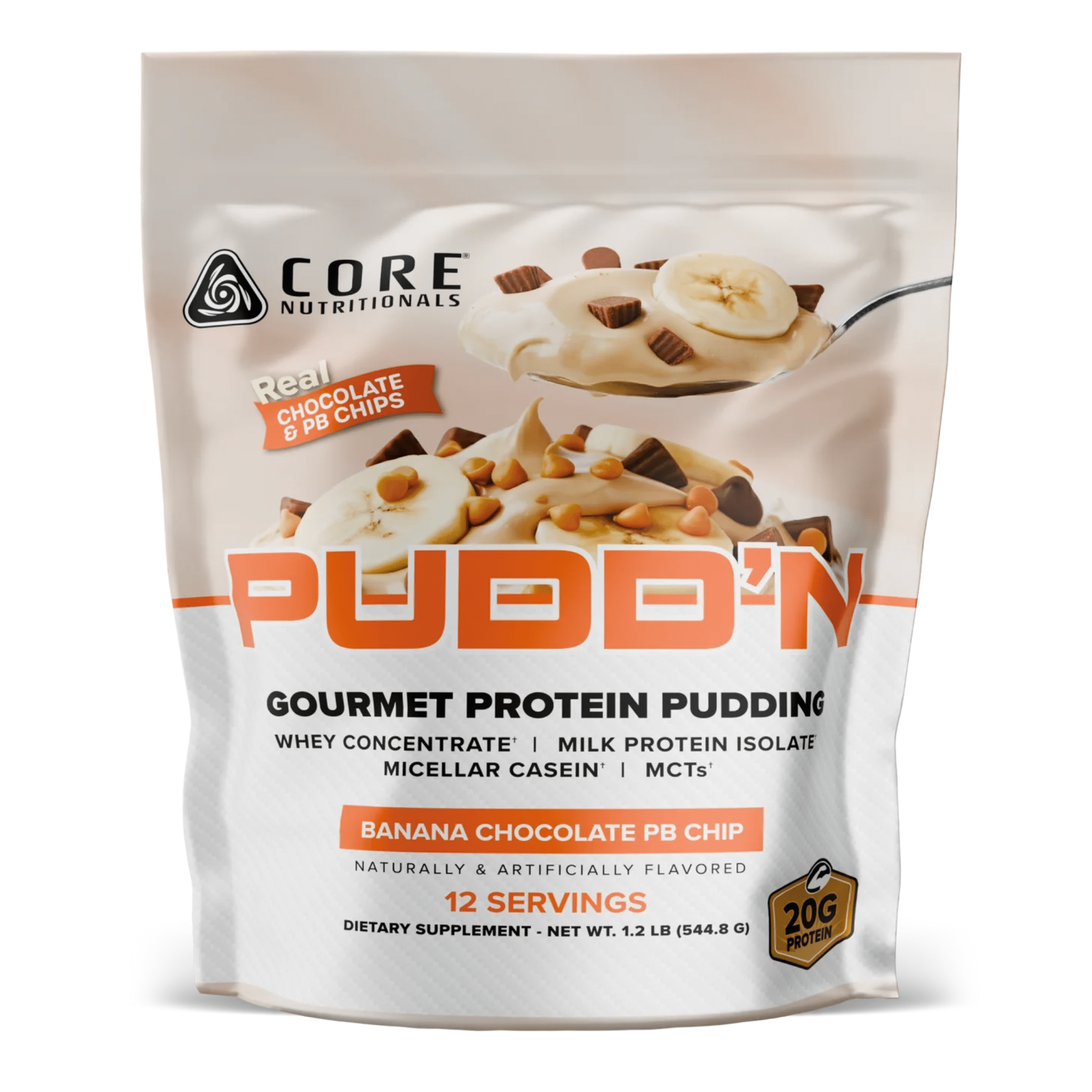
Core Nutritionals PUDD'N
A protein powder formulated to make a thick pudding rather than a shake — mixed with far less liquid and eaten with a spoon.
Why texture solves a genuine problem
This sounds like a gimmick until you understand what it is actually for.
Liquid calories are far less satiating than solid ones. That is a well-documented effect: drinking a shake registers as considerably less filling than eating the same calories, and it clears the stomach faster.
Which is a problem when you are dieting. In a deficit you are hungry, and a protein shake that disappears in thirty seconds and leaves you no fuller is an inefficient use of your calorie budget.
A pudding you eat with a spoon changes that in two ways:
- It takes longer to eat, and eating rate genuinely affects satiety signalling
- It feels like food — psychologically, having a dessert is a very different experience from drinking a shake, and adherence is what determines whether a diet works
That is the honest case for this product: it is a compliance tool. The protein is the same protein. What differs is whether you finish your diet.
Where it fits
- Dieting, as a dessert that fits your macros — the clearest use
- Evening cravings, which is when most diets are broken
- Anyone sick of shakes after months of them
- As a casein-style slow protein before bed, depending on the protein sources used
- Mixing into oats or yoghurt, where a thicker protein works better than a thin one
How thickness actually works
Worth knowing, because it explains why you cannot simply use less water with an ordinary protein.
Thickness comes from either the protein source or added thickeners.
- Casein thickens naturally. It forms a gel in the stomach — which is why casein is the classic before-bed protein, since that gel slows digestion and provides a longer amino acid release. A casein-containing product will thicken on its own
- Whey does not. Whey stays thin no matter how little water you use — it just becomes concentrated and gritty rather than creamy
- Added thickeners such as gums and fibres create the texture without changing the protein
Check your panel for the protein source — it tells you whether this is a fast protein made thick, or a genuinely slow one.
Full label disclosure
Core Nutritionals built their reputation on fully disclosed labels with no proprietary blends. On a protein product that matters for a specific reason.
Amino spiking is the practice of adding cheap free-form amino acids — glycine, taurine, glutamine — to inflate nitrogen-based protein tests without supplying complete usable protein. A nitrogen test cannot tell the difference. A fully disclosed label can, because the protein sources are listed and there is nowhere for spiking to hide.
Also worth running the arithmetic: divide the protein by the scoop weight. Around 80% and above is an isolate-grade product; a dessert-style blend will sit lower because of the thickeners and flavour system, which is expected rather than a fault.
Specs
| Format | Thick pudding — mixed with minimal liquid |
| Label | Fully disclosed, no proprietary blends |
| ⚠ Allergen | Contains milk |
How to take it
- Use considerably less liquid than a shake — that is the entire point. Start with a small amount and add gradually.
- Let it sit for a minute or two after mixing. Thickeners and casein need a moment to hydrate properly.
- Chill it if you want a firmer, more dessert-like texture.
- As an evening dessert, which is where it earns its place while dieting.
- Count it toward your daily protein total.
Who this is for
- Anyone dieting who needs a dessert that fits their macros
- People whose diets fall apart in the evening
- Anyone tired of drinking shakes
- People who find liquid protein unsatisfying
- Anyone who wants a slower protein before bed
Who this is not for
Anyone who wants protein around training. A thick, slow protein is the wrong tool there — whey isolate or a hydrolysed protein digests far faster.
Anyone optimising cost per gram of protein. Plain whey isolate is cheaper, and the texture is what you are paying extra for.
Anyone with a milk allergy.
Anyone sensitive to added fibres or gums, which can cause bloating in some people.
Not for anyone under 18 without medical advice.
Stack it with: creatine, which mixes in without affecting the texture.
Frequently asked questions
Why would I want a protein pudding?
Liquid calories are far less satiating than solid ones. A pudding takes longer to eat, feels like food, and is far more useful than a shake when you are dieting and hungry.
Can I just use less water with normal whey?
No — whey stays thin regardless. It becomes concentrated and gritty rather than creamy. Thickness comes from casein, which gels, or from added thickeners.
Is it a slow or fast protein?
Check the panel. Casein thickens naturally and digests slowly; a whey-based product made thick with gums is still a fast protein.
When should I take it?
As an evening dessert while dieting, or before bed if it is casein-based. Not around training, where a fast protein is better.
How much liquid should I use?
Considerably less than a shake. Start small, add gradually, and let it sit a minute or two to hydrate.
Does it count toward my protein target?
Yes — unlike collagen, which is an incomplete protein.
What is amino spiking?
Adding cheap free-form amino acids to inflate nitrogen-based protein tests without supplying complete protein. A fully disclosed label leaves nowhere for it to hide.
Why is the protein percentage lower than an isolate?
The thickeners and flavour system take up weight. That is expected in a dessert-style product rather than a fault.
You may also like
Recently viewed
- Opens in a new window.