

Description
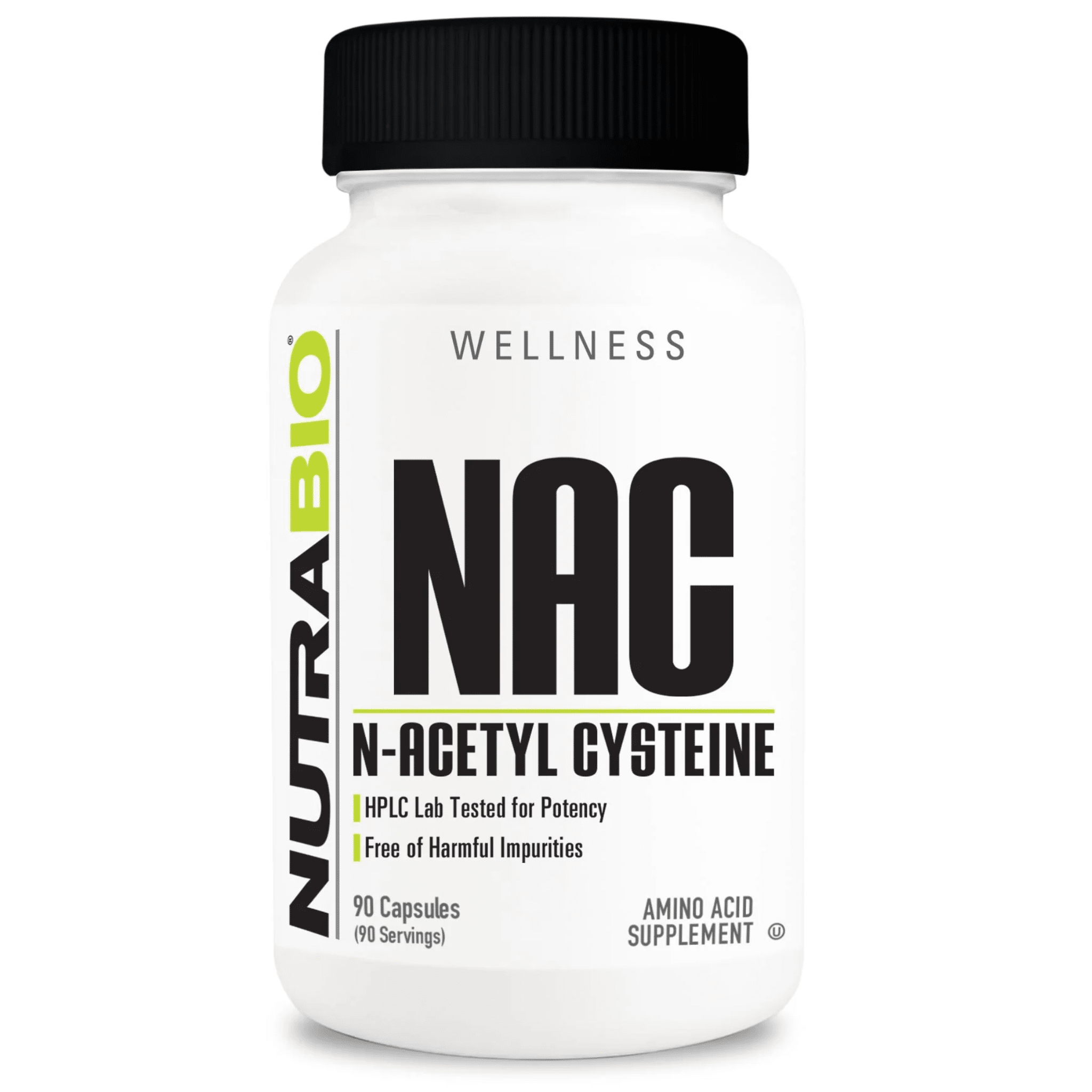
NutraBio N-Acetyl-Cysteine (NAC)
N-acetyl-cysteine, single ingredient, with no fillers or excipients. Fully disclosed label, third-party tested.
Why NAC rather than glutathione itself
This is the point of the product, and it is a genuinely elegant piece of biochemistry.
Glutathione is your body's principal endogenous antioxidant — produced inside your own cells, and central to neutralising oxidative stress and to the liver's detoxification pathways.
So the obvious move would be to supplement glutathione directly. It largely does not work. Oral glutathione is a tripeptide, and like other peptides it is broken apart during digestion into its constituent amino acids before it reaches circulation.
NAC solves that by supplying the bottleneck instead.
Glutathione is built from three amino acids — glutamate, glycine and cysteine. Glutamate and glycine are abundant. Cysteine is the rate-limiting one: the step that determines how much glutathione you can make.
NAC is a stable, well-absorbed form of cysteine. Supply cysteine and your cells build their own glutathione — which is the route that actually works.
Same principle we explain on our GHOST Pump page, where oral glutathione is included and the bioavailability question applies.
What NAC is genuinely used for
NAC has an unusually solid footing for a supplement, because it has a long history of clinical use.
- Liver support. NAC is used medically as the standard treatment for paracetamol overdose, precisely because it restores glutathione in the liver. That is a strong indication of the mechanism working
- Mucus thinning. NAC breaks disulphide bonds in mucus, which is why it has been used in respiratory conditions for decades
- Antioxidant capacity, by raising glutathione rather than adding an antioxidant directly
- On-cycle support alongside oral compounds that stress the liver — commonly stacked with milk thistle
- Exercise-induced oxidative stress, which rises with hard training
An honest note on that last one: there is a genuine argument that blunting exercise-induced oxidative stress may also blunt some training adaptations, since that oxidative signal is part of what tells your body to adapt. The research is not settled. If you are taking NAC purely as a training antioxidant, taking it away from your workout is the more cautious approach.
Specs
| N-Acetyl-Cysteine | Single ingredient |
| Other ingredients | None beyond the capsule |
| Label | Fully disclosed, no proprietary blends |
| Testing | Third-party tested, published at checkmysupps.com |
⚠ Practical notes worth knowing
It smells of sulphur. Cysteine is a sulphur-containing amino acid, and NAC has a distinctly eggy smell when you open the bottle. That is entirely normal and not a sign the product has spoiled — it is what the molecule smells like.
Take it away from food if you can. NAC absorbs better on an empty stomach, though taking it with food reduces nausea if that is an issue for you.
Do not take it alongside nitroglycerin or nitrate-based heart medication without medical advice — NAC potentiates the effect and can cause a significant drop in blood pressure.
If you have asthma, speak to your doctor. NAC has been used in respiratory conditions, but bronchospasm has been reported in some asthmatic patients.
How to take it
- Follow the label. Common supplemental doses run 600 to 1,800mg daily.
- Split across the day if taking more than one serving — NAC clears reasonably quickly.
- Preferably on an empty stomach, or with food if it causes nausea.
- Consider taking it away from training if your goal is general antioxidant support rather than liver support.
- Consistently if you are using it as on-cycle support.
Who this is for
- Anyone running an oral compound that stresses the liver
- People who drink regularly
- Anyone wanting to raise glutathione by the route that actually works
- People taking long-term medication processed hepatically
- Anyone who wants a single-ingredient product with published lab results
Who this is not for
Anyone taking nitroglycerin or nitrate heart medication, without medical advice.
Anyone with asthma, without checking with a doctor first.
Anyone about to have surgery — NAC may affect clotting. Discontinue two weeks beforehand.
If the sulphur smell bothers you, that is inherent to the molecule rather than the brand.
If you want a broader liver formula, Revive MD Liver combines NAC with milk thistle and TUDCA.
Not for anyone under 18, pregnant or nursing.
Stack it with: milk thistle — the two are the standard pairing for liver support and work through different mechanisms.
Frequently asked questions
Why take NAC instead of glutathione?
Oral glutathione is a tripeptide and is largely broken apart during digestion. NAC supplies cysteine, the rate-limiting amino acid, so your cells build their own glutathione.
What is glutathione?
Your body's principal endogenous antioxidant, made inside your cells and central to liver detoxification.
Why does it smell of eggs?
Cysteine is a sulphur-containing amino acid. The smell is inherent to the molecule and not a sign of spoilage.
Should I take it with food?
It absorbs better on an empty stomach, but food reduces nausea if that is a problem for you.
Can I take it around training?
You can, but there is a reasonable argument that blunting exercise-induced oxidative stress may also blunt some adaptation. Taking it away from your workout is the more cautious approach.
Is it safe with medication?
Check with your doctor, particularly if you take nitroglycerin or nitrate heart medication — NAC potentiates those and can drop blood pressure significantly.
Can asthmatics take it?
Speak to your doctor. NAC is used in respiratory conditions, but bronchospasm has been reported in some asthmatic patients.
How much should I take?
Common supplemental doses run 600 to 1,800mg daily. Follow the label and split larger amounts across the day.
You may also like
Recently viewed
- Opens in a new window.