

Description
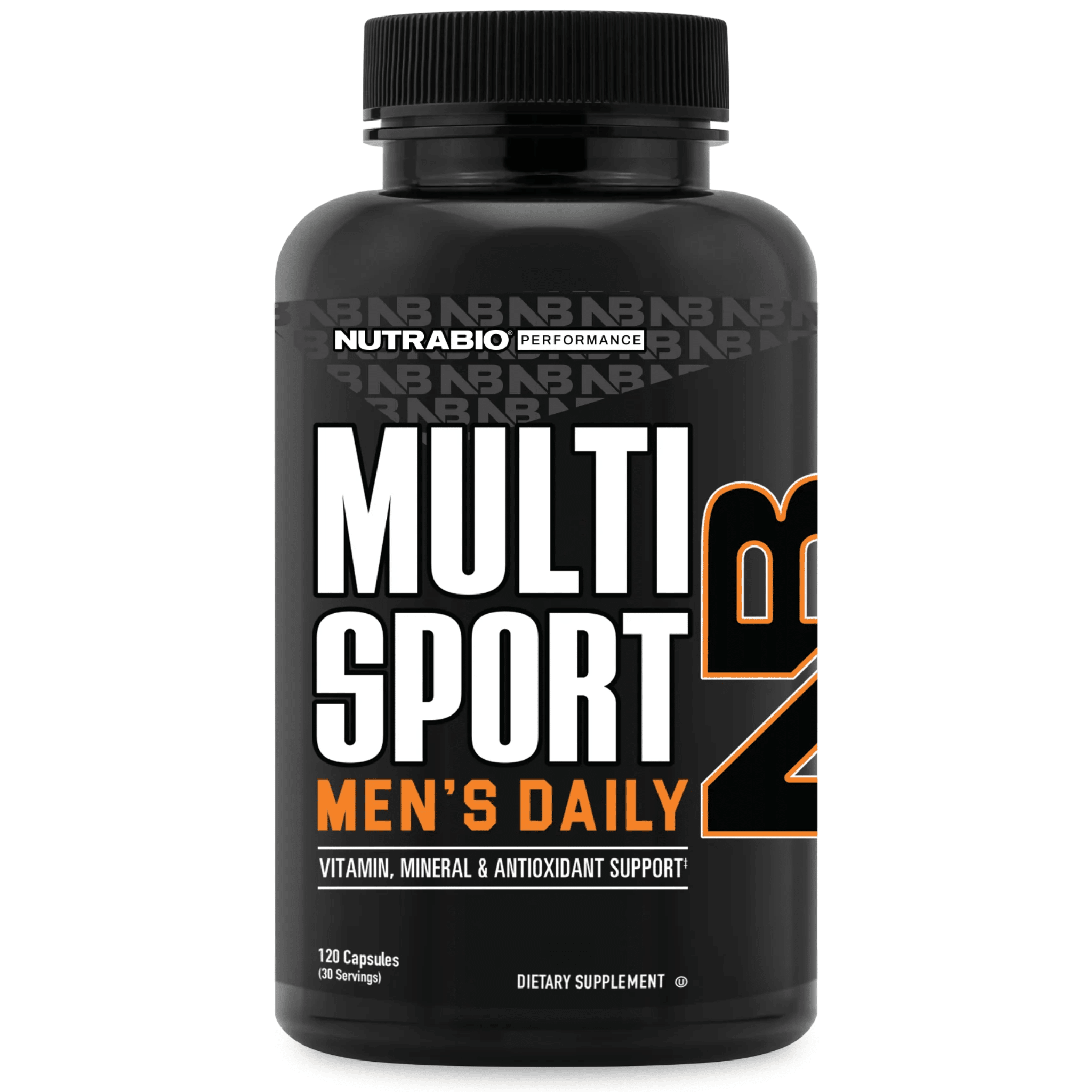
NutraBio MultiSport for Men
33 vitamins, minerals and micronutrients, formulated in the more bioavailable forms throughout. Fully disclosed, no proprietary blends.
Where multivitamins usually cut corners — and how to spot it
Nearly all multivitamins list the same nutrients. What separates them is the form each nutrient takes, and that is where cost is saved.
The forms that matter most, and what MultiSport uses instead:
| Minerals | Cheap: oxides and carbonates | Here: Albion TRAACS chelated |
| Vitamin E | Cheap: dl-alpha-tocopherol (synthetic) | Here: d-alpha-tocopheryl succinate (natural) |
| Vitamin K | Cheap: K1 only, or none | Here: MenaQ7 MK-7 |
Why chelated minerals matter: minerals in raw inorganic form compete for a limited number of gut transporters, and much of what you swallow is excreted. Chelation bonds the mineral to an amino acid so it is absorbed through the far higher-capacity amino acid pathway instead. Full explanation on our Reacted Magnesium page.
Why the vitamin E form matters: synthetic vitamin E (the "dl-" prefix) is a mixture of eight stereoisomers, only one of which your body uses efficiently. Natural vitamin E ("d-" prefix) is that single usable form. The one-letter difference on a label represents a substantial difference in what you absorb.
Why MK-7 matters: vitamin K2 as MK-7 has a considerably longer half-life than the MK-4 form, meaning one daily dose maintains levels. And K2 has a specific role worth knowing — it helps direct calcium into bone rather than soft tissue, which is why it pairs logically with vitamin D.
Why athletes have different requirements
This is the argument for a sport-specific multivitamin, and it is a reasonable one rather than pure marketing.
- Sweat losses. Zinc, magnesium, sodium, potassium and several B vitamins are lost in sweat. Train hard, sweat heavily, lose more
- Elevated metabolic turnover. The B vitamins are cofactors in energy metabolism, and higher energy throughput means higher demand for them
- Oxidative stress rises with training volume, increasing demand for antioxidant nutrients
- Restrictive dieting. When calories fall, micronutrient intake falls with them — which is precisely when demand does not
A standard one-a-day multivitamin is built around preventing deficiency in a sedentary population. That is a different target from supporting someone training five times a week in a deficit.
The honest position on multivitamins generally
We would rather be straight with you than sell this as essential.
A multivitamin is insurance, not a foundation. If you eat a varied diet with plenty of vegetables, fruit, protein and whole grains, you are probably not deficient in most of these, and the incremental benefit is modest.
Where it genuinely earns its place:
- When dieting. Reduced food intake means reduced micronutrient intake, and this is the clearest case
- When your diet is repetitive. Many people who train eat the same handful of meals, which narrows the nutrient range considerably
- When training volume is high and losses are elevated
- When vegetables are honestly not a strength of your diet
What it will not do is fix a poor diet. Whole foods bring fibre, phytonutrients and compounds no capsule contains. This covers gaps; it does not replace eating well.
Specs
| Nutrients | 33 vitamins, minerals and micronutrients |
| Minerals | Albion TRAACS chelated |
| Vitamin E | d-alpha-tocopheryl succinate (natural) |
| Vitamin K | MenaQ7 MK-7 |
| B vitamins | Full spectrum |
| Capsules | 120 |
| Label | Fully disclosed, no proprietary blends |
| Testing | Third-party tested, published at checkmysupps.com |
Also available as MultiSport for Women, which differs principally in iron content — see that page for why that distinction matters.
⚠ Count your other supplements
Worth doing before you add a multivitamin to an existing stack.
Zinc, B6 and vitamin D are the three most likely to stack up unintentionally. Zinc appears in ZMA and test formulas, B6 in B-complexes and energy products, and vitamin D in fish oil combinations and greens powders.
As our B-Complex page explains, B6 has a genuine upper limit — and zinc's ceiling from all sources is around 40mg daily.
How to take it
- With food. Several of these are fat-soluble — A, D, E and K — and absorb poorly without a meal.
- Split the daily serving across two meals if it is more than one capsule. Absorption of several nutrients is limited per sitting.
- Morning or midday rather than evening, as B vitamins are mildly stimulating for some people.
- Not alongside coffee or tea. Tannins and polyphenols reduce absorption of several minerals, iron especially.
- Expect bright yellow urine. That is riboflavin, and it is harmless.
Who this is for
- Anyone training hard, particularly with heavy sweat losses
- People in a caloric deficit, where micronutrient intake falls with food intake
- Anyone whose diet is repetitive or light on vegetables
- People who want better-absorbed forms rather than the cheapest available
- Anyone who would rather read a fully disclosed panel than trust a blend
Who this is not for
Anyone eating a genuinely varied diet with no risk factors. The incremental benefit is modest, and we will say so.
Anyone already taking several individual vitamins. Add up your totals first, particularly zinc, B6 and vitamin D.
Anyone hoping it will compensate for a poor diet. It covers gaps rather than replacing food.
Anyone taking medication that interacts with vitamin K — warfarin in particular, where consistent vitamin K intake matters. Speak to your doctor.
Not for anyone under 18, pregnant or nursing without medical advice.
Stack it with: fish oil and vitamin D, checking totals for overlap.
Frequently asked questions
What makes this different from a supermarket multivitamin?
The forms. Chelated Albion minerals rather than oxides, natural d-alpha vitamin E rather than synthetic dl-alpha, and MK-7 vitamin K. Those choices affect how much you actually absorb.
Why does the vitamin E form matter?
Synthetic vitamin E is a mixture of eight stereoisomers, only one of which your body uses efficiently. The natural form is that single usable one — a one-letter label difference representing a substantial absorption difference.
Do athletes really need a different multivitamin?
Requirements are genuinely higher — sweat losses, elevated metabolic turnover, more oxidative stress, and often restricted calories. Standard multivitamins target deficiency prevention in a sedentary population.
Should I take it with food?
Yes. Vitamins A, D, E and K are fat-soluble and absorb poorly without a meal.
Why is my urine bright yellow?
Riboflavin (B2), which is fluorescent yellow. Harmless.
Can I take it with coffee?
Better not. Tannins and polyphenols reduce absorption of several minerals, iron in particular.
Do I need a multivitamin at all?
It is insurance rather than a foundation. If your diet is varied you likely need it less; if you are dieting, eating repetitively or training heavily, it earns its place.
What is the difference from the women's version?
Principally iron content. See the MultiSport for Women page for why that distinction matters.
If you're looking for a basic vitamin, this does the trick. To me it isn't anything fancy but is cheaper than the fancier ones out there.
I have made plenty of orders through you guys. Always been satisfied. This time I placed an order on 2/19/21 and I have yet to receive it. Going on two weeks.
This vitamin is rock solid. Eat with food and my energy levels are higher and workouts are better. Love this stuff, well done CoalitionNutrion.
You may also like
Recently viewed
- Opens in a new window.